Custom Workwear & Uniform Collection
New program concepts for distributors, uniform brands and multi-site employers. Build a coordinated range around real job requirements, branding and care conditions. Every program is developed to an agreed technical specification and approved sample.
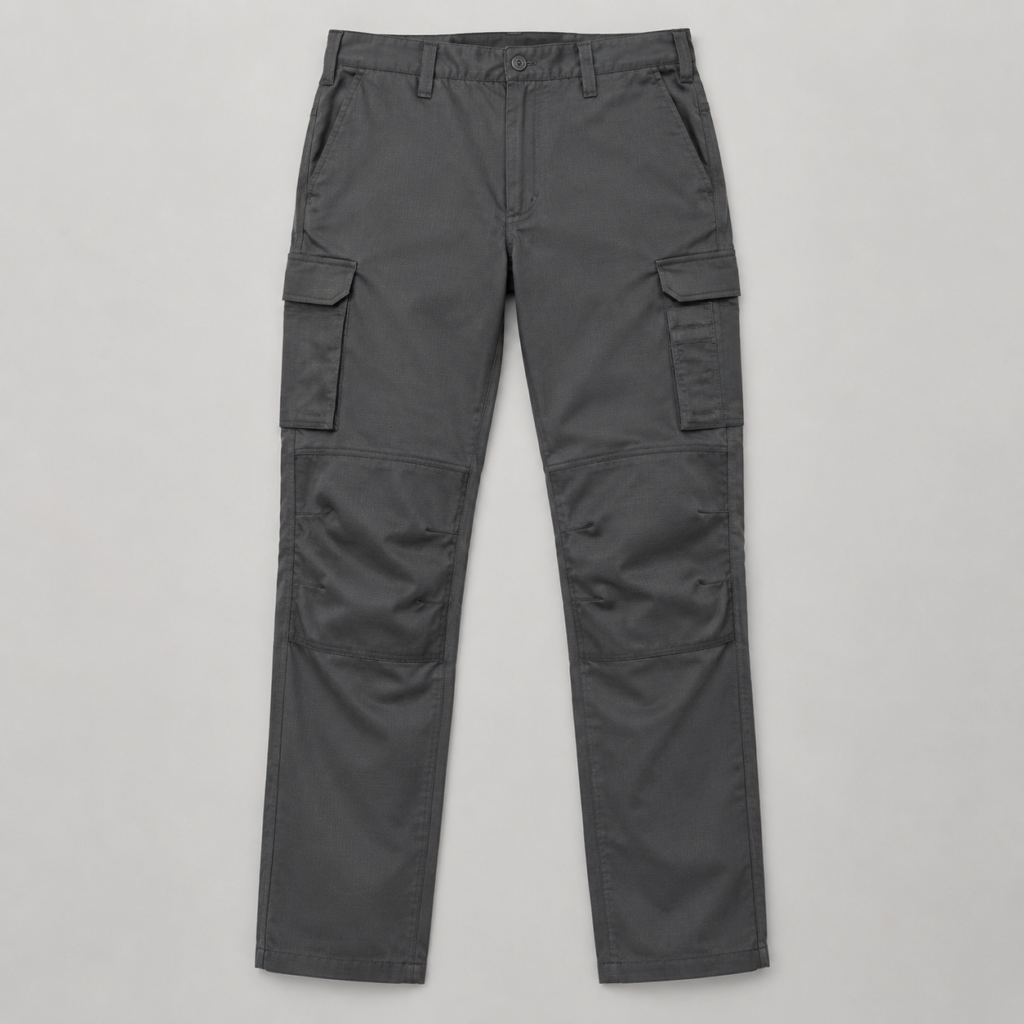
Custom trade and industrial workwear
Modern work trousers have to balance mobility, abrasion exposure, pocket access, appearance and repeat-order consistency. UNIWORKWEAR develops specification-led trousers for trade, maintenance, field service and light-industrial uniform programs. Choose the design direction, then confirm fabric weight, stretch construction, reinforcement zones, pocket layout, colour, branding method, size range and care requirements through sampling.
1. Stretch trade trousers
A versatile foundation for construction trades, maintenance crews, installers and service technicians. The program can be developed with articulated knees, stretch panels or stretch woven fabric, reinforced high-wear zones, ruler and cargo pockets, secure phone storage and a clean professional silhouette.
- Best for: trade distributors, maintenance contractors, field-service teams and private-label workwear ranges.
- Specify before sampling: stretch type, target fabric weight, pocket map, reinforcement material, knee construction, leg lengths and laundering method.
- Branding options: embroidery, heat transfer, woven labels and private-label packaging, subject to artwork and material trials.
2. Women’s trade trousers
A women-specific block should be more than a smaller version of a men’s trouser. This program prioritizes waist shaping, rise, hip and thigh balance, graded leg lengths, pocket placement and freedom of movement. Fit approval should use a representative wearer panel across the intended size range.
- Best for: mixed-gender workforces, utilities, facilities management, logistics and inclusive uniform programs.
- Development focus: women-specific base pattern, practical pocket capacity, movement testing, size-set review and consistent colour matching with the wider uniform range.
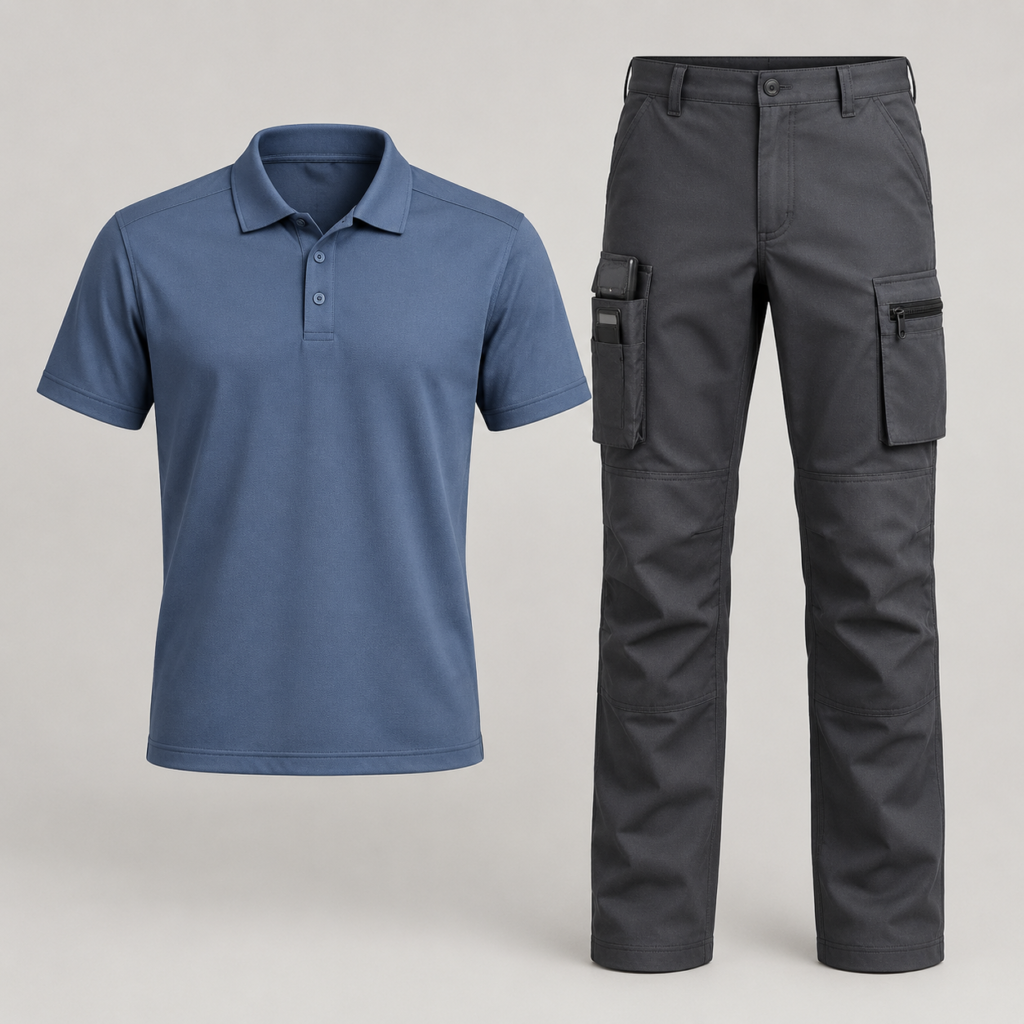
Warehouse and logistics uniforms
Warehouse teams move between picking, packing, loading, driving and customer-facing tasks. A useful uniform system needs breathable tops, unobstructed movement, secure storage for scanners and small tools, dependable sizing and garments that remain presentable through repeated washing.
3. Warehouse cargo trousers
A clean cargo trouser designed around practical storage rather than bulky styling. Configurable details include scanner or device pockets, zipped valuables storage, reinforced stress points, elastic or adjustable waist features and stretch zones for lifting and crouching.
4. Breathable warehouse polo
A coordinated polo for indoor logistics, delivery and facilities teams. Fabric selection should reflect the working temperature, branding method, snag risk and care process. Options can include moisture-management structures, contrast panels, long- and short-sleeve variants and role-based colourways. Performance is only stated when supported by the agreed fabric and test evidence.
See our broader logistics uniform capabilities or request a development sample.
Field-service uniforms
5. Field-service overshirt
A versatile overshirt for technicians, installers, facilities teams and mobile service crews. The design can be developed with secure chest storage, sleeve adjustment, movement-friendly back construction, an untucked or tucked hem and branding that remains visible without interfering with tools or safety equipment. Fabric weight and layering allowance should match the destination climate and job environment.
Hospitality uniform programs
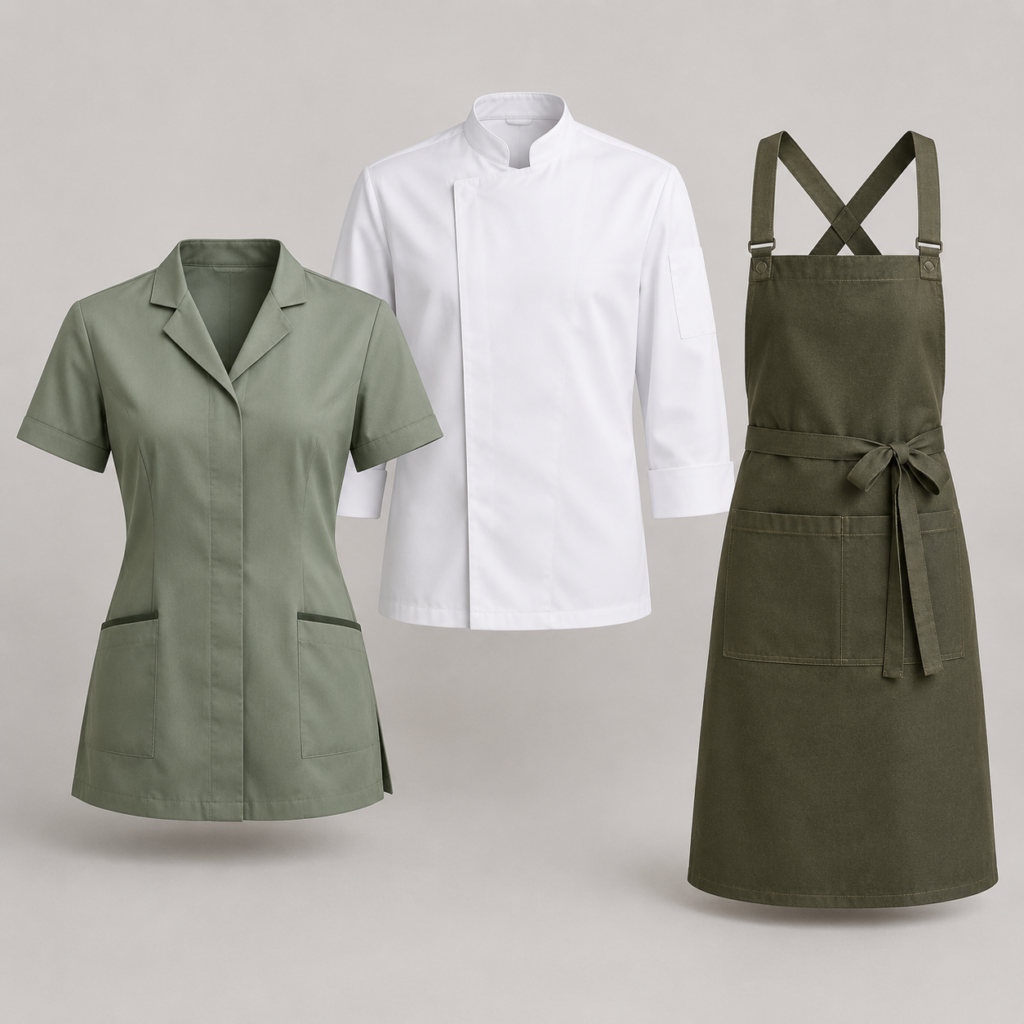
Hotel and restaurant uniforms have to carry a brand across different roles while meeting very different movement, heat, pocket and laundering needs. UNIWORKWEAR can develop coordinated colour and trim systems for housekeeping, kitchen and front-of-house teams while keeping each garment appropriate to its job.
6. Housekeeping tunic
A practical tunic concept for hotels, resorts, serviced apartments and cleaning contractors. Development choices include hip-pocket geometry, key or device storage, side vents, contrast trims, concealed fastenings and fabric that matches the intended wash process. Fit trials should include reaching, bending, pushing carts and working across a full shift.
7. Lightweight chef jacket
A lightweight chef-jacket direction for kitchen teams working in warm, high-movement environments. Buyers can specify sleeve length, front closure, ventilation zones, pocket placement and coordinated colours. Heat comfort, stain release and laundering performance depend on the selected construction and must be confirmed during sampling and testing.
8. Cross-back bistro apron
A front-of-house or kitchen apron that shifts strap pressure away from the neck. Development options include apron length and width, divided or zipped pockets, removable straps, hardware finish, contrast stitching and brand-specific colour combinations.
Explore the existing hospitality uniform range or start a custom quotation.
Healthcare and security uniform programs
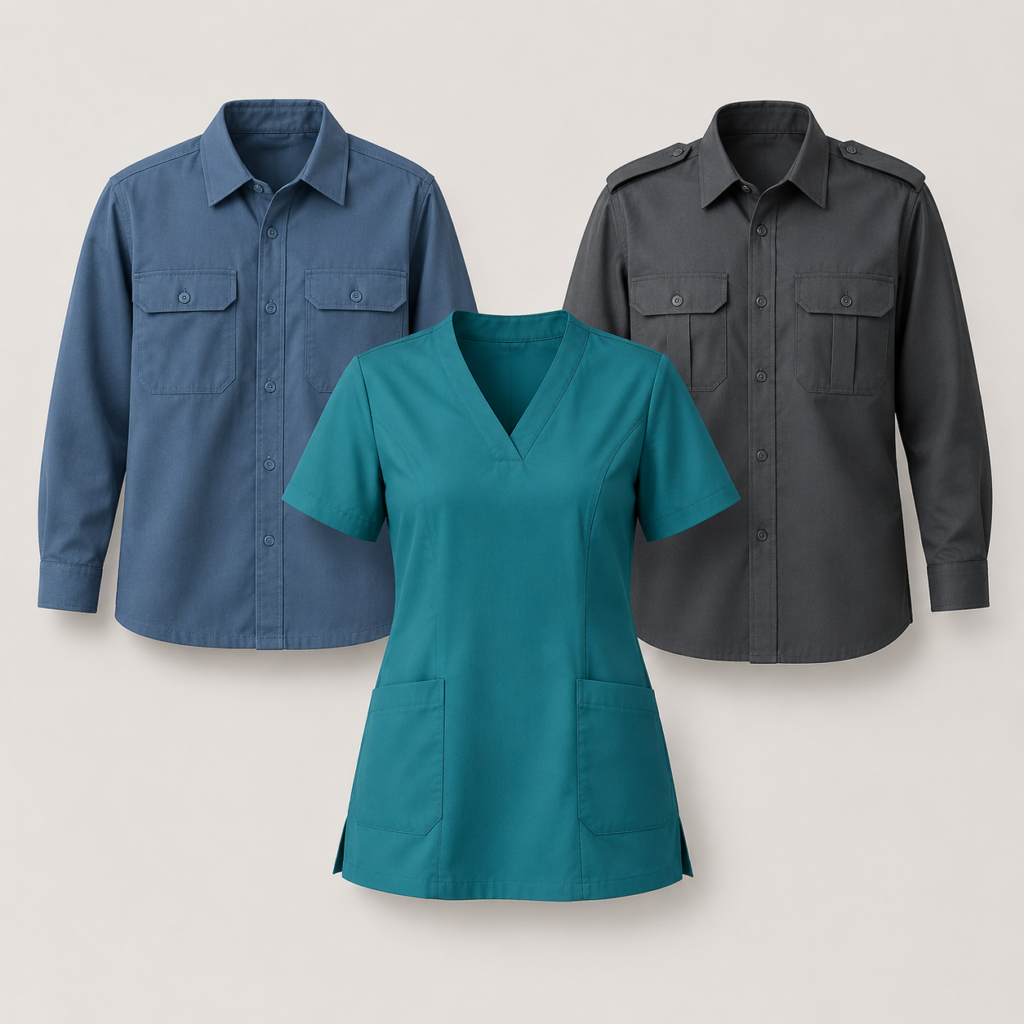
Support and security roles need clear identification, practical storage, dependable fit and a professional appearance. These are non-PPE uniform concepts; any infection-control, protective or security-specific requirement must be defined and evidenced separately.
9. Healthcare support tunic
A non-protective tunic concept for care support, reception, facilities and service roles. The brief can define neckline, pocket layout, side vents, modesty requirements, role-based colours, size range and the intended wash process. Clinical or protective claims are excluded unless the finished garment is supported by the required evidence.
10. Security uniform shirt
A smart uniform shirt for private security, reception security and access-control teams. Configurable elements include sleeve length, epaulettes, chest pockets, pen channels, concealed fastenings, name or badge attachment points and role-specific colours. Insignia, badges and protected marks are produced only from buyer-approved artwork and authorization.
What buyers should include in a product brief
| Decision | Information to provide | Why it matters |
|---|---|---|
| Wearer and task | Job role, movements, climate and shift conditions | Shapes fit, fabric and functional details |
| Fabric and care | Preferred composition, weight, stretch and wash process | Controls comfort, appearance and service life |
| Fit and sizing | Target market, size range, gender/fit blocks and leg lengths | Reduces fit failures and costly replacements |
| Storage | Tools, scanners, phones, keys and documents carried | Creates a job-specific pocket map |
| Brand identity | Colours, artwork, logo placement, labels and packaging | Keeps the program consistent across roles |
| Evidence | Required test methods, standards and buyer documentation | Prevents unsupported performance claims |
| Commercial plan | Forecast by style, colour and size, target delivery and Incoterm | Supports an accurate development and quotation process |
From concept to approved production
- Brief and technical review: define the wearer, use case, market, quantities and required evidence.
- Material and construction proposal: align fabric, trims, fit blocks, branding and care conditions.
- Prototype sample: review appearance, measurements, movement and functional details.
- Size set and wear trial: validate grading and real-work performance before final approval.
- Pre-production approval: lock the bill of materials, colours, labels, packaging and quality checkpoints.
Compliance and performance claims
These ten concepts are non-PPE product directions. If a garment is intended to protect against a regulated hazard—suchuch as high visibility, flame and heat, electric arc, chemical splash or another serious risk—itt enters a separate compliance pathway. Applicable standards, test reports, conformity assessment, user information, marking and market-specific documentation must be established for the finished garment before protective claims are made.
UNIWORKWEAR uses a simple rule: specify first, test where required, and claim only what the evidence supports.
Frequently asked questions
Can these garments be private labelled?
Private-label development can include garment labels, size and care labels, packaging and approved branding. Exact options depend on the product specification, destination market and order plan.
Can colours and pockets be customized?
Yes. Colour, paneling, pocket layout, trims and branding can be developed around an agreed brief. Material availability, colour matching and functional feasibility are confirmed before approval.
Do you offer samples?
Sample development is available for qualified programs. Send the intended product, quantities, market, size range, artwork and delivery requirements so the team can recommend the next step.
Are the visualized products certified protective clothing?
No. The images on this page are concept visuals for configurable non-PPE uniform programs. No certification or protective performance should be inferred from an image.
Build your next uniform range
Send your target roles, product list, estimated quantities, destination markets and required delivery window. We will turn the brief into a development conversation.
Concept visuals illustrate configurable design directions. Final construction, materials, measurements, performance and availability are confirmed through the approved specification and sample process.