Author: UNIWORKWEAR

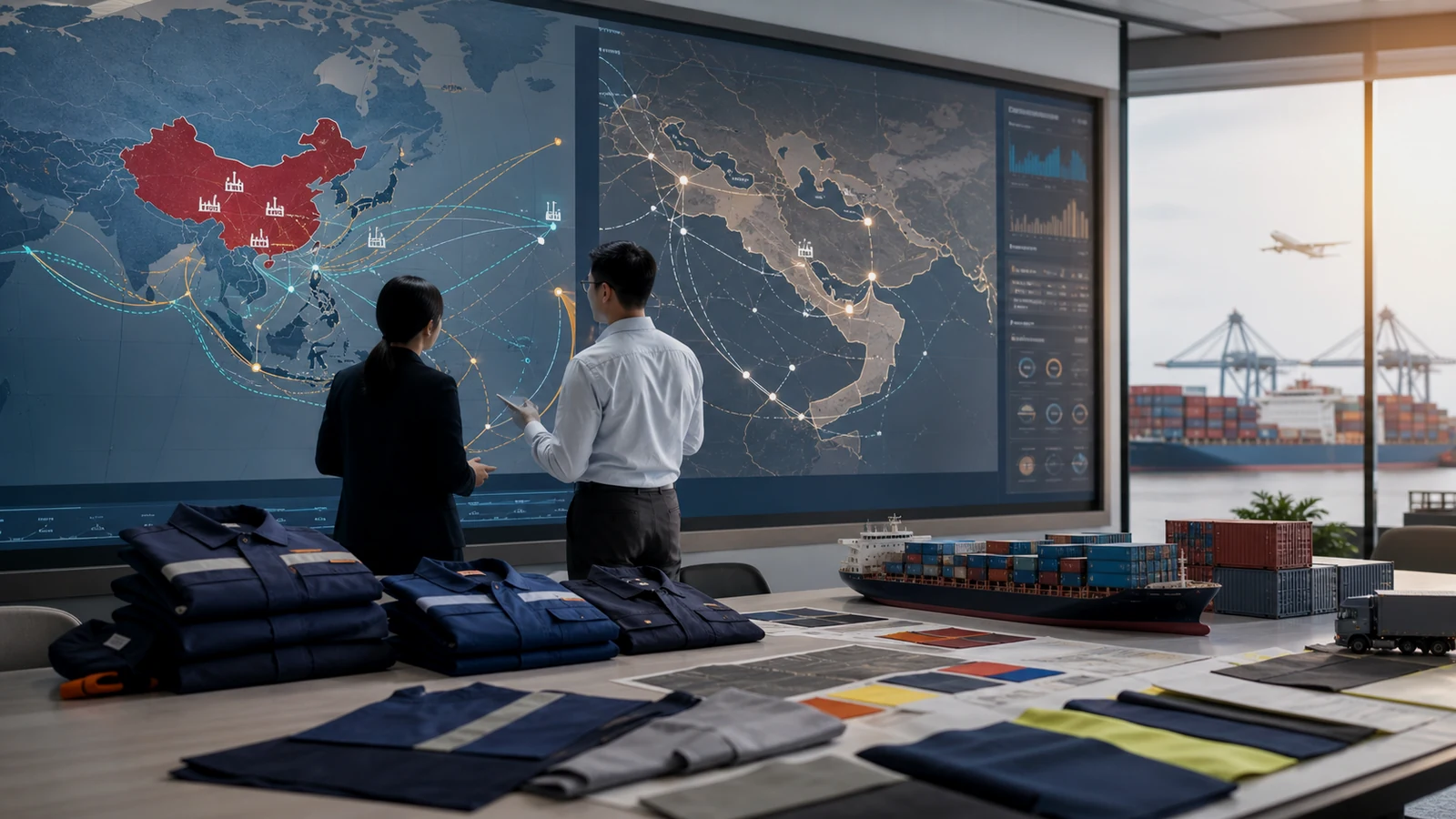
  • China\’s Economy in 2026: Why the Workwear Industry Is More Exposed Than You Think

    China\’s Economy in 2026: Why the Workwear Industry Is More Exposed Than You Think

    China’s economic situation in 2026 is more complex — and more fragile — than official statistics suggest. For B2B buyers sourcing workwear and uniforms, understanding the real picture matters because it directly affects supplier reliability, quality consistency, and long-term partnership viability.

    The Property Crisis Is Still Unresolved

    China’s property sector crisis, which began with Evergrande in 2021, remains unresolved in 2026. Hundreds of billions in developer debt have been restructured but not eliminated. Consumer confidence remains suppressed, domestic demand is weak, and local government finances — which fund much of the infrastructure that supports manufacturing — are under severe strain.

    For garment factories, this means reduced domestic orders, pressure to export at any price, and a workforce that is increasingly mobile and difficult to retain.

    Youth Unemployment and the Labour Supply Problem

    China’s official youth unemployment rate peaked above 21% in 2023 before the government stopped publishing the data. The underlying reality — a mismatch between the skills of a university-educated generation and the manual labour demands of garment manufacturing — has not improved.

    Factories are struggling to maintain skilled workforces. Experienced sewers and quality control staff are leaving the industry. The result is inconsistent quality, higher defect rates, and longer training cycles for new workers.

    The Export Dependency Trap

    With domestic demand weak and the property sector depressed, Chinese manufacturing is more dependent on exports than at any point in the past decade. But exports are under pressure from tariffs, geopolitical tensions, and competition from lower-cost manufacturers in other regions.

    This creates a dangerous dynamic: factories need export orders to survive, which means they will accept orders at margins that are not sustainable. Buyers who lock in long-term contracts with financially stressed Chinese suppliers are taking on more risk than they realise.

    The Honest Assessment

    China will remain a major manufacturing country. But the era of uncomplicated, low-risk, low-cost sourcing from China is over. Buyers who treat it as such are operating on assumptions that no longer reflect reality. Diversification is not a hedge — it is a necessity.

  • US Tariffs at 145%: The Death of Chinese Workwear Exports to North America

    US Tariffs at 145%: The Death of Chinese Workwear Exports to North America

    Let us be direct: at 145% tariffs, Chinese workwear is no longer commercially viable for the North American market. This is not a temporary trade dispute — it is a structural shift that is reshaping global uniform supply chains in 2026.

    What 145% Tariffs Actually Mean

    If a Chinese factory quotes you $10 per unit for a work polo shirt, the landed cost in the United States after tariffs is approximately $24.50 — before freight, customs brokerage, or your own margin. The same garment from a non-tariffed manufacturer at $12 per unit lands at $12 plus freight. The math is not close.

    For large uniform programs — 5,000 pieces or more — the tariff differential alone can represent hundreds of thousands of dollars in additional cost. No procurement manager can justify that to their finance team.

    The Ripple Effects Beyond North America

    The impact extends beyond direct US imports. Chinese factories that previously relied on North American orders are now flooding other markets — Europe, Australia, the Middle East — with discounted inventory to maintain cash flow. This creates short-term pricing pressure but also quality risks, as factories cut corners to compete on price.

    It also means that Chinese suppliers quoting aggressively to non-US buyers may be doing so from a position of financial stress, not competitive strength. That is a supply chain risk that does not show up in a price comparison spreadsheet.

    Where Are Buyers Sourcing Instead?

    The shift is real and measurable. Buyers who previously sourced exclusively from China are actively qualifying alternative manufacturers in other regions. The criteria are consistent: competitive pricing, verified quality certifications, transparent production, and the ability to handle the volumes that China previously absorbed.

    UNIWORKWEAR has seen a significant increase in inquiries from North American distributors and procurement teams in 2025-2026. Our factory-direct pricing, ISO certifications, and established export infrastructure make us a credible alternative for buyers navigating this transition.

  • The US-Iran Conflict in 2026: How a Middle East War Is Raising Your Uniform Costs

    The US-Iran Conflict in 2026: How a Middle East War Is Raising Your Uniform Costs

    Most procurement managers do not connect a military conflict in the Persian Gulf to the price of their staff uniforms. They should. The ongoing US-Iran conflict is one of the most underreported drivers of workwear cost increases in 2026 — and it is not going away soon.

    The Strait of Hormuz: The World’s Most Important Shipping Chokepoint

    Approximately 20% of global oil passes through the Strait of Hormuz. When tensions escalate — as they have repeatedly since late 2024 — shipping insurance premiums spike, vessels reroute, and the cost of moving goods from Asia to Europe and the Americas increases significantly.

    For workwear buyers, this translates directly into higher freight quotes, longer lead times, and suppliers passing on cost increases with little notice.

    Oil Prices and Synthetic Fabric Costs

    Polyester, nylon, and other synthetic fabrics used in workwear are petroleum derivatives. When oil prices spike due to Middle East instability, fabric costs follow within weeks. Chinese factories, which rely heavily on synthetic blends for industrial and hi-vis workwear, have been passing these increases directly to buyers.

    In Q1 2026, polyester fabric prices increased by an estimated 18-22% compared to the same period in 2024. For a buyer ordering 10,000 pieces of hi-vis workwear, this is not a rounding error — it is a significant budget impact.

    Red Sea Rerouting: 14 Extra Days You Did Not Budget For

    Many shipping lines have rerouted vessels away from the Red Sea and Suez Canal, adding 10 to 14 days to transit times from Asia to Europe. For B2B buyers with tight uniform rollout schedules — new staff onboarding, seasonal changeovers, compliance deadlines — this is a serious operational risk.

    What Buyers Are Doing About It

    The buyers who are managing this well are doing three things: ordering earlier to absorb transit delays, diversifying their supplier base to reduce single-country exposure, and working with manufacturers who have multiple freight options and established logistics partnerships.

    UNIWORKWEAR ships to 40+ countries with multiple carrier options and can advise on routing based on current conditions. Request a quote to discuss your specific timeline requirements.

  • Why Chinese Workwear Factories Are Struggling in 2026 — And What B2B Buyers Should Do Instead

    Why Chinese Workwear Factories Are Struggling in 2026 — And What B2B Buyers Should Do Instead

    The global workwear sourcing landscape has shifted dramatically in 2026. While Chinese manufacturers dominated B2B uniform supply chains for decades, a combination of geopolitical pressure, factory closures, and supply chain disruptions is forcing international buyers to rethink their sourcing strategy.

    The Hidden Crisis Inside Chinese Workwear Factories

    On the surface, Chinese factories still appear to be operating normally. Alibaba listings are active, sample requests are being answered, and prices look competitive. But behind the scenes, the situation is far more fragile than most buyers realise.

    • Rising labour costs — Minimum wages in key manufacturing provinces like Guangdong and Zhejiang have increased by over 30% since 2022, eroding the cost advantage that made China attractive.
    • Factory consolidation and closures — Thousands of small and mid-size garment factories have closed since 2023. Many that remain are operating at reduced capacity or have pivoted to domestic orders.
    • US tariffs exceeding 145% — Chinese workwear is effectively shut out of the North American market, creating ripple effects across global pricing and factory viability.
    • Shipping route disruptions — The ongoing US-Iran conflict in the Persian Gulf has pushed freight costs and lead times to unpredictable levels.

    What Chinese Factories Are Not Telling You

    The most concerning aspect is not what is happening — it is what suppliers are not disclosing:

    • Subcontracting without disclosure — Factories under capacity pressure are quietly subcontracting to smaller, unvetted workshops. Quality control becomes impossible to enforce.
    • Fabric substitution — With raw material costs rising, some factories substitute specified fabrics with cheaper alternatives. This is particularly dangerous for hi-vis and safety-rated workwear.
    • Certification fraud — Demand for certified workwear has increased, but so has the circulation of fraudulent or expired certificates from suppliers under commercial pressure.

    The Smart Buyer Response

    Experienced procurement teams are diversifying their manufacturing base. Key criteria: geographic stability outside conflict-adjacent shipping routes, verified certifications (ISO 9001, OEKO-TEX, EN ISO 20471), transparent production with no subcontracting, and flexible MOQs for risk-managed testing.

    UNIWORKWEAR operates as a direct factory manufacturer with full in-house production — no subcontracting, no hidden workshops. Our facility produces over 500,000 garments monthly for B2B clients across 40+ countries, with established freight partnerships that route around current conflict zones.

  • Minimum Order Quantities in Workwear Manufacturing: What to Expect

    Minimum Order Quantities in Workwear Manufacturing: What to Expect

    Minimum Order Quantities in Workwear Manufacturing: What to Expect

    One of the first questions every B2B buyer asks a workwear manufacturer: “What’s your MOQ?” The answer affects your budget, your inventory strategy, and whether a particular factory is the right fit for your business.

    This guide explains how MOQs work in workwear manufacturing, why they exist, and how to negotiate them.

    What Is MOQ?

    MOQ stands for Minimum Order Quantity — the smallest number of units a manufacturer will produce in a single order. Below this number, the factory either won’t accept the order or will charge a premium.

    Why Do Manufacturers Have MOQs?

    Manufacturing workwear involves fixed costs that don’t change whether you order 50 pieces or 5,000:

    • Fabric sourcing — fabric mills have their own minimums, typically 500-1,000 meters per color
    • Pattern making and cutting — setting up cutting machines takes the same time regardless of quantity
    • Production line setup — configuring sewing lines for a new style takes hours
    • Quality control — inspection processes have fixed overhead
    • Customization setup — embroidery digitizing, screen preparation, label printing plates

    Small orders spread these fixed costs over fewer units, making the per-unit price uneconomically high for both the factory and the buyer.

    Typical MOQs in Workwear Manufacturing

    Order Type Typical MOQ Notes
    ODM (existing designs) 300-500 per style Lower because patterns and samples already exist
    OEM (custom designs) 500-1,000 per style Higher due to new pattern development
    Stock/catalog items 100-300 per style Lowest MOQ since everything is ready to produce
    Private label 300-500 per style Includes custom labels and packaging
    Fully custom (new fabric + design) 1,000+ per style Fabric mills require their own minimums

    Per style means per design. If you order 3 different jacket styles, each style needs to meet the MOQ separately. However, sizes and colors within a style are usually combined — so 100 medium + 100 large + 100 XL = 300 pieces of one style.

    How MOQ Affects Pricing

    There’s a direct relationship between order quantity and unit price:

    Quantity Price Impact
    Below MOQ Factory may refuse, or charge 20-40% premium
    At MOQ (300-500) Standard pricing
    1,000-3,000 pieces 5-15% discount
    5,000+ pieces 15-25% discount
    10,000+ pieces Best pricing, maximum negotiation leverage

    How to Work with MOQs

    1. Consolidate Styles

    Instead of ordering 5 different styles at 100 pieces each, consider 2 styles at 250 pieces. Fewer styles at higher quantities gets you better pricing and easier MOQ compliance.

    2. Start with ODM

    If you’re a new buyer, start with the manufacturer’s existing designs (ODM). MOQs are lower because the factory doesn’t need to develop new patterns. Once you’ve established a relationship and understand your market demand, move to OEM for custom designs.

    3. Combine Colors Within a Style

    Most factories count all colors of the same style toward the MOQ. So 150 navy + 150 black of the same jacket design = 300 pieces total.

    4. Negotiate Based on Relationship

    First orders often have strict MOQs. As you become a repeat customer, manufacturers are more willing to be flexible. A factory that knows you’ll reorder quarterly is more likely to accept a smaller initial order.

    5. Ask About Stock Programs

    Some manufacturers maintain stock of popular styles in standard colors. These have the lowest MOQs (sometimes as low as 50-100 pieces) because the factory has already produced them.

    6. Accept Higher Per-Unit Pricing

    If you genuinely need a small quantity, some factories will produce below MOQ at a premium price. This makes sense for samples, test orders, or niche products.

    MOQ Red Flags

    • No MOQ at all — if a “manufacturer” has no minimum, they’re likely a trading company buying from multiple sources, not a factory
    • Extremely high MOQ (5,000+ for basic styles) — the factory may be too large for your needs, or they’re not interested in smaller clients
    • MOQ changes after quoting — a sign of disorganization or bait-and-switch tactics

    MOQ at UNIWORKWEAR

    UNIWORKWEAR offers competitive MOQs designed to work for both established brands and growing businesses:

    • ODM orders: 300 pieces per style
    • OEM orders: 500 pieces per style
    • Stock items: 100 pieces per style
    • All sizes and colors within a style count toward MOQ
    • Flexible terms for repeat customers
    • Sample orders available before committing to bulk

    Request a quote — tell us what you need, the quantities you’re considering, and we’ll find the most cost-effective approach for your order.

    Related guides:

    View our products or get a quote.

  • Workwear Customization: Embroidery vs Screen Printing vs Heat Transfer

    Workwear Customization: Embroidery vs Screen Printing vs Heat Transfer

    Workwear Customization: Embroidery vs Screen Printing vs Heat Transfer

    Your logo on a work uniform does more than brand your team — it turns every employee into a walking billboard. But the method you choose for applying that logo affects how it looks, how long it lasts, and how much it costs.

    This guide compares the three most common workwear customization methods so you can make the right choice for your order.

    Embroidery

    The premium choice. Thread is stitched directly into the fabric using computerized machines.

    Pros

    • Professional, high-end appearance
    • Extremely durable — survives 100+ industrial wash cycles
    • Works on virtually all fabrics
    • Adds texture and dimension to the design
    • Color doesn’t fade over time

    Cons

    • Higher cost per unit, especially for large or complex designs
    • Not suitable for very detailed or photographic designs
    • Limited to around 12-15 thread colors per design
    • Small text (under 5mm) can be hard to read

    Best For

    • Company logos on polo shirts, jackets, and caps
    • Corporate and hospitality uniforms
    • Small to medium-sized designs (chest logos, sleeve badges)
    • Orders where durability and premium look matter most

    Cost

    Typically $2-8 per piece depending on design size and stitch count. Setup fee for digitizing the design: $20-50 (one-time).

    Screen Printing

    The volume choice. Ink is pushed through a mesh screen onto the fabric, one color at a time.

    Pros

    • Lowest cost per unit for large orders
    • Vibrant, bold colors
    • Great for large designs (full back prints, chest panels)
    • Fast production for high volumes

    Cons

    • Each color requires a separate screen (adds cost for multi-color designs)
    • Not cost-effective for small orders (under 50 pieces)
    • Can crack or fade after 50+ washes if not done properly
    • Doesn’t work well on textured or stretchy fabrics
    • Ink sits on top of the fabric — can feel stiff on large prints

    Best For

    • Large back prints and chest panels
    • Safety messaging and warning text on workwear
    • High-volume orders (100+ pieces)
    • Simple designs with 1-4 colors

    Cost

    Typically $1-4 per piece for orders of 100+. Screen setup fee: $15-30 per color (one-time).

    Heat Transfer

    The versatility choice. A design is printed onto transfer paper or vinyl, then pressed onto the fabric with heat and pressure.

    Pros

    • Full-color, photographic-quality designs possible
    • No minimum order — works for even 1 piece
    • No setup fees
    • Works on most fabric types
    • Great for complex, multi-color logos

    Cons

    • Less durable than embroidery — typically 40-60 wash cycles
    • Can peel or crack over time, especially with industrial laundering
    • Higher per-unit cost than screen printing for large orders
    • Visible edges on some transfer types

    Best For

    • Complex, multi-color logos
    • Small orders or samples
    • Name and number personalization
    • Designs with gradients or photographic elements

    Cost

    Typically $2-6 per piece. No setup fees.

    Side-by-Side Comparison

    Factor Embroidery Screen Printing Heat Transfer
    Durability 100+ washes 50+ washes 40-60 washes
    Best order size Any 100+ pieces 1-100 pieces
    Design complexity Simple to medium Simple (1-4 colors) Any complexity
    Design size Small to medium Any size Any size
    Look and feel Premium, textured Bold, flat Smooth, printed
    Cost per unit $2-8 $1-4 $2-6
    Setup cost $20-50 $15-30/color None

    Which Method Should You Choose?

    • Choose embroidery if you want a premium look that lasts forever — ideal for corporate logos on polos, jackets, and caps
    • Choose screen printing if you’re ordering 100+ pieces with a simple design and want the lowest per-unit cost
    • Choose heat transfer if your design is complex/multi-color, you need small quantities, or you need individual personalization

    Pro tip: Many buyers combine methods — embroidered logo on the chest, screen-printed safety text on the back. This gives you the best of both worlds.

    Customization Services at UNIWORKWEAR

    UNIWORKWEAR offers all three customization methods in-house, plus sublimation printing for all-over designs.

    • Embroidery — up to 15 colors, any placement
    • Screen printing — up to 8 colors, any size
    • Heat transfer — full-color, photographic quality
    • Sublimation — all-over prints, permanent color
    • Custom labels, tags, and packaging
    • Free design mockups before production

    Send us your logo and we’ll create a free mockup showing how it looks with each method — so you can compare before you commit.

    Related guides:

    Learn about our customization capabilities or contact us.

  • Hospitality Uniforms: What Hotels and Restaurants Need

    Hospitality Uniforms: What Hotels and Restaurants Need

    Hospitality Uniforms: What Hotels and Restaurants Need

    In hospitality, your staff’s appearance is your brand. Guests form opinions about your establishment within seconds of seeing your team. The right uniforms communicate quality, attention to detail, and professionalism — before a single word is spoken.

    This guide covers what hotels, restaurants, and catering companies need to know when sourcing hospitality uniforms.

    Why Hospitality Uniforms Are Different

    Hospitality uniforms have unique requirements that set them apart from industrial workwear:

    • Appearance is everything — they must look polished throughout an entire shift
    • Comfort during long hours — staff are on their feet 8-12 hours
    • Frequent washing — daily laundering means fabrics must retain shape and color
    • Multiple roles, multiple styles — front desk, housekeeping, kitchen, management all need different uniforms

    Uniforms by Department

    Front of House — Reception, Concierge, Guest Relations

    These are your brand ambassadors. Their uniforms should reflect your hotel or restaurant’s positioning.

    • Luxury properties: Tailored blazers, dress shirts, silk scarves or ties
    • Business hotels: Smart blazers with branded polo shirts or button-downs
    • Casual/boutique: Branded polo shirts or mandarin collar shirts
    • Fabrics: Poly-viscose blends (wrinkle-resistant, holds shape), 180-220 GSM

    Kitchen Staff — Chefs, Cooks, Kitchen Assistants

    • Chef coats: Double-breasted, long-sleeve, breathable cotton or poly-cotton
    • Chef trousers: Elastic waist, comfortable fit, dark colors or checkered patterns
    • Aprons: Full-length for chefs, waist aprons for line cooks
    • Fabrics: 100% cotton or 65/35 poly-cotton, 200-250 GSM, must withstand 60°C+ washing

    Housekeeping

    • Tunics or polo shirts with comfortable trousers or skirts
    • Practical pockets for carrying supplies
    • Stretch fabrics for bending, reaching, and physical work
    • Stain-resistant treatments to maintain appearance

    Restaurant Service — Waiters, Bartenders

    • Dress shirts or mandarin collar shirts — clean, professional look
    • Waist aprons or full aprons — practical and stylish
    • Vests or waistcoats — for upscale dining
    • Dark colors — hide stains better during service

    Management

    • Suits or blazers that distinguish management from staff
    • Higher-quality fabrics — wool blends, premium poly-viscose
    • Subtle branding — embroidered logo on chest or lapel pin

    Fabric Selection for Hospitality

    Fabric Best For Key Properties
    Poly-viscose Front of house, management Wrinkle-resistant, drapes well, professional look
    Poly-cotton (65/35) Kitchen, housekeeping Durable, easy care, withstands industrial laundering
    100% Cotton Chef coats Breathable, absorbs moisture, comfortable in hot kitchens
    Stretch blends Housekeeping, active roles Freedom of movement, comfort during physical work

    Branding Your Hospitality Uniforms

    Your logo placement and method should match your property’s positioning:

    • Embroidery — the gold standard for hospitality. Clean, professional, durable. Best on chest, collar, or cuff
    • Woven labels — inside branding for a premium feel
    • Metal name badges — personalized, reusable, professional
    • Custom buttons — subtle branding detail for blazers and chef coats

    Ordering Tips for Hospitality Buyers

    1. Order by department — each department has different needs, don’t try to use one uniform for all
    2. Plan for turnover — hospitality has high staff turnover, keep buffer stock in common sizes
    3. Test wash cycles — request samples and wash them 20+ times before committing to bulk
    4. Consider seasons — lighter fabrics for summer, layering options for winter
    5. Get staff input — comfortable staff perform better and stay longer

    Hospitality Uniforms from UNIWORKWEAR

    UNIWORKWEAR manufactures complete hospitality uniform programs for hotels, restaurants, resorts, and catering companies worldwide.

    • Full range — chef coats, service uniforms, housekeeping, front desk, management
    • Custom design to match your brand identity
    • Premium embroidery and branding
    • Sizes from XS to 5XL
    • Reorder programs for ongoing supply
    • Free samples and design consultation

    Request hospitality uniform samples — tell us about your property and we’ll propose a complete uniform program.

    Related guides:

    See our industry solutions or request samples.

  • Corporate Uniform Programs: Benefits, Planning, and Implementation

    Corporate Uniform Programs: Benefits, Planning, and Implementation

    Corporate Uniform Programs: Benefits, Planning, and Implementation

    A corporate uniform program does more than dress your team — it builds brand recognition, creates team unity, and projects professionalism at every customer interaction. Companies that implement uniform programs consistently report improved brand perception and employee satisfaction.

    This guide covers why corporate uniforms matter, how to plan a program, and what to look for in a supplier.

    Why Corporate Uniforms Matter

    Brand Recognition

    Every employee wearing your branded uniform is a walking advertisement. Consistent visual identity across all locations and touchpoints builds trust and recognition with customers. Studies show that uniformed employees are perceived as more competent and trustworthy.

    Team Unity

    Uniforms eliminate visible economic differences between employees and create a sense of belonging. When everyone wears the same quality uniform, the focus shifts from individual appearance to collective performance.

    Professional Image

    First impressions happen in seconds. A well-dressed team signals that your company pays attention to detail, values quality, and takes its business seriously.

    Cost Savings for Employees

    When the company provides uniforms, employees save money on work clothing. This is especially valued in industries where clothing gets damaged or dirty during work.

    Types of Corporate Uniform Programs

    Full Uniform Programs

    The company provides complete outfits — shirts, trousers, jackets, and accessories. Common in hospitality, healthcare, airlines, and retail.

    Branded Basics

    The company provides branded tops (polo shirts, button-downs, or t-shirts) and employees wear their own trousers. Common in tech, retail, and service industries.

    Tiered Programs

    Different uniform styles for different roles — management gets blazers, field staff gets polo shirts, warehouse gets hi-vis. Maintains brand consistency while addressing different functional needs.

    How to Plan a Corporate Uniform Program

    Step 1: Define Your Objectives

    • What image do you want to project?
    • What functional requirements exist (safety, comfort, climate)?
    • How many employees need uniforms?
    • How often will uniforms need replacing?

    Step 2: Design Your Uniforms

    • Choose styles that align with your brand identity
    • Select colors from your brand palette
    • Decide on logo placement — left chest, back, sleeve
    • Consider different styles for different departments or roles

    Step 3: Choose Your Supplier

    • Look for manufacturers with corporate uniform experience
    • Request samples across your full size range
    • Evaluate fabric quality, stitching, and branding accuracy
    • Confirm they can handle your volume and reorder schedule

    Step 4: Size and Distribute

    • Collect size information from all employees
    • Order extra stock in common sizes for new hires
    • Set up a distribution system — direct to employee or through department managers

    Step 5: Maintain and Replenish

    • Establish a replacement schedule (typically every 6-12 months)
    • Set up a reorder process with your supplier
    • Provide care instructions to employees to extend garment life

    Customization Options

    Method Best For Durability Cost
    Embroidery Logos on polo shirts, jackets Excellent — survives 100+ washes Medium
    Screen printing Large designs, back prints Good — 50+ washes Low (for large orders)
    Heat transfer Complex, multi-color designs Good — 40+ washes Medium
    Sublimation All-over prints, sportswear style Excellent — permanent Higher
    Woven labels Inside branding, size labels Excellent Low

    Industries That Benefit Most

    • Hospitality — hotels, restaurants, catering companies
    • Healthcare — hospitals, clinics, dental practices
    • Retail — stores, showrooms, customer service
    • Corporate offices — banks, insurance, consulting firms
    • Transportation — airlines, logistics, delivery services
    • Education — schools, universities, training centers

    Start Your Corporate Uniform Program with UNIWORKWEAR

    UNIWORKWEAR manufactures corporate uniforms for companies across 40+ countries. From polo shirts to full suit programs, we handle design, production, branding, and packaging.

    • Full customization — embroidery, printing, sublimation, custom labels
    • All styles — polos, shirts, blazers, trousers, jackets, accessories
    • Size runs from XS to 5XL
    • Reorder programs for ongoing supply
    • Free design consultation and samples

    Request a corporate uniform consultation — we’ll help you design a program that fits your brand, budget, and team size.

    Related guides:

    Browse our product range or request a quote.

  • How to Find a Reliable Workwear Manufacturer: A Sourcing Guide

    How to Find a Reliable Workwear Manufacturer: A Sourcing Guide

    How to Find a Reliable Workwear Manufacturer: A Sourcing Guide

    Finding the right workwear manufacturer can make or break your business. A good factory delivers consistent quality, meets deadlines, and scales with you. A bad one delivers headaches, delays, and products your customers reject.

    This guide shows you exactly how to evaluate and select a workwear manufacturer you can trust.

    Where to Find Workwear Manufacturers

    Online B2B Platforms

    • Alibaba — largest directory, but requires careful vetting
    • Made-in-China — strong for Chinese manufacturers
    • Kompass — European and international manufacturers
    • Europages — European supplier directory

    Trade Shows

    • A+A (Düsseldorf) — world’s largest safety and workwear trade show
    • Texworld (Paris) — fabric and garment sourcing
    • Canton Fair (Guangzhou) — massive supplier exhibition
    • NSCAA/NSC Safety Congress (USA) — safety equipment and workwear

    Direct Search

    • Google searches for specific product types + “manufacturer” or “factory”
    • Industry association directories
    • Referrals from other buyers in your network

    10 Things to Check Before Choosing a Manufacturer

    1. Factory vs. Trading Company

    A factory makes the products. A trading company buys from factories and resells to you — adding a markup and removing your direct control. Always ask: “Do you own the factory?” Request factory photos and videos.

    2. Production Capacity

    Can they handle your order volume? Ask about monthly output, number of production lines, and current capacity utilization. A factory running at 95% capacity may struggle with your timeline.

    3. Specialization

    A factory that makes everything from evening dresses to safety jackets is a red flag. Look for manufacturers that specialize in workwear — they understand the technical requirements, safety standards, and fabric specifications your products need.

    4. Certifications

    Relevant certifications to look for:

    • ISO 9001 — quality management system
    • OEKO-TEX Standard 100 — tested for harmful substances
    • BSCI / SEDEX — ethical manufacturing and labor practices
    • Product certifications — EN ISO 20471 (hi-vis), EN ISO 11612 (flame-resistant), etc.

    5. Sample Quality

    Always order samples before committing to bulk. Evaluate stitching, fabric quality, sizing accuracy, label placement, and overall finish. A manufacturer that can’t get a sample right won’t get 5,000 pieces right.

    6. Communication

    How quickly do they respond? Do they understand your requirements? Can they communicate in your language? Poor communication during the quoting phase only gets worse during production.

    7. Lead Times

    Standard workwear production takes 30-45 days after sample approval. Be wary of manufacturers promising significantly faster turnaround — it often means cutting corners.

    8. Quality Control Process

    Ask about their QC process: Do they inspect during production or only at the end? What’s their defect tolerance? Do they provide inspection reports? A factory with a robust QC process saves you from receiving substandard goods.

    9. References and Track Record

    Ask for references from existing clients, especially in your market. How long have they been in business? What brands do they supply? A manufacturer with 10+ years of experience and verifiable clients is a safer bet.

    10. Payment Terms

    Standard terms are 30% deposit, 70% before shipment. Be cautious of factories demanding 100% upfront. Established manufacturers often offer more flexible terms for repeat customers.

    Red Flags to Watch For

    • No factory photos or videos available
    • Prices significantly below market rate
    • Unwillingness to provide samples
    • No certifications or test reports
    • Vague answers about production capacity
    • Pressure to place large orders immediately
    • No references from existing clients

    Why Buyers Choose UNIWORKWEAR

    UNIWORKWEAR is a factory-direct workwear manufacturer with 15+ years of experience supplying B2B buyers across 40+ countries.

    • We own our factory — no middlemen, no markups
    • 500+ employees, 6 production lines
    • Specialized exclusively in workwear and uniforms
    • ISO 9001, OEKO-TEX, EN ISO 20471 certified
    • Free samples and fabric swatches
    • Dedicated account manager for every client
    • Pre-shipment inspection reports included

    Get a free quote — tell us what you need and we’ll respond with pricing, samples, and a production timeline within 48 hours.

    Related guides:

    Learn about our factory and company or quality process.

  • Best Fabrics for Industrial Work Uniforms: A Buyer Guide

    Best Fabrics for Industrial Work Uniforms: A Buyer Guide

    Best Fabrics for Industrial Work Uniforms: A Buyer’s Guide

    The fabric you choose for work uniforms determines everything — durability, comfort, safety compliance, and how many wash cycles the garment survives. Choose wrong and you’re replacing uniforms every few months. Choose right and they last years.

    This guide covers the most common fabrics used in industrial workwear and when to use each one.

    Poly-Cotton Blends (65/35 or 60/40)

    The industry standard. Most industrial workwear worldwide uses poly-cotton blends.

    • Composition: 65% polyester, 35% cotton (most common)
    • Weight range: 180-300 GSM
    • Pros: Durable, wrinkle-resistant, retains color well, affordable, easy to wash
    • Cons: Less breathable than 100% cotton, can feel synthetic in hot climates
    • Best for: General industrial work, construction, logistics, manufacturing

    The 65/35 blend gives you the durability of polyester with enough cotton for comfort. It’s the go-to choice for most B2B workwear orders.

    100% Cotton

    The comfort choice — and the safety choice.

    • Weight range: 200-350 GSM
    • Pros: Breathable, comfortable, naturally flame-resistant (doesn’t melt), hypoallergenic
    • Cons: Wrinkles easily, shrinks if not pre-treated, fades faster than blends
    • Best for: Flame-resistant workwear, hot climate environments, workers with skin sensitivities

    100% cotton is mandatory in environments where flash fire or arc flash is a risk. Unlike polyester, cotton chars rather than melts — a critical safety difference.

    100% Polyester

    Maximum durability and color retention.

    • Weight range: 150-250 GSM
    • Pros: Extremely durable, excellent color retention, quick-drying, wrinkle-free
    • Cons: Less breathable, can feel hot, melts under extreme heat (not suitable for flame-risk environments)
    • Best for: Hi-vis workwear, outdoor work in wet conditions, sublimation printing

    Polyester is the preferred fabric for hi-vis garments because fluorescent dyes bond better with polyester fibers, maintaining brightness longer.

    Ripstop Fabric

    Built to resist tearing.

    • Composition: Usually nylon or polyester with reinforcement threads woven in a grid pattern
    • Weight range: 180-260 GSM
    • Pros: Tear-resistant, lightweight, durable
    • Cons: More expensive than standard weaves
    • Best for: Military-style workwear, outdoor work, environments with snag hazards

    Flame-Resistant (FR) Fabrics

    Non-negotiable in oil & gas, electrical, and welding environments.

    • Types: Treated cotton, inherent FR fabrics (Nomex, Modacrylic blends)
    • Certifications: EN ISO 11612 (Europe), NFPA 2112 (USA)
    • Pros: Self-extinguishing, protects against flash fire and arc flash
    • Cons: More expensive, heavier, requires specific laundering
    • Best for: Oil & gas, electrical utilities, welding, petrochemical

    Treated FR cotton is more affordable but loses protection after many washes. Inherent FR fabrics maintain protection for the life of the garment but cost significantly more.

    Stretch Fabrics (with Elastane/Spandex)

    For jobs that demand freedom of movement.

    • Composition: Base fabric + 2-5% elastane/spandex
    • Pros: Flexible, comfortable, reduces fatigue during physical work
    • Cons: Slightly less durable than rigid fabrics, higher cost
    • Best for: Trousers, coveralls for mechanics, maintenance workers, anyone doing physical labor

    Fabric Weight Guide (GSM)

    GSM Range Classification Best For
    150-180 Lightweight Summer workwear, hospitality, indoor work
    200-250 Medium weight Year-round industrial workwear, most applications
    260-300 Heavyweight Winter workwear, heavy-duty industrial, construction
    300+ Extra heavy Specialized protective workwear, extreme conditions

    How to Choose the Right Fabric

    1. Identify hazards — fire risk? Chemical exposure? Low visibility? This determines mandatory fabric properties
    2. Consider climate — hot environments need breathable, lighter fabrics; cold environments need heavier, insulated options
    3. Check compliance — your target market’s safety regulations dictate minimum fabric requirements
    4. Request fabric swatches — always feel and test the fabric before committing to bulk orders
    5. Ask about wash durability — industrial laundering is harsh; your fabric needs to survive 50+ cycles minimum

    Get Fabric Samples from UNIWORKWEAR

    At UNIWORKWEAR, we work with all major fabric types and can recommend the optimal choice for your specific application. We stock poly-cotton, 100% cotton, polyester, ripstop, FR fabrics, and stretch blends.

    • Free fabric swatch books for qualified buyers
    • Custom fabric sourcing for specialized requirements
    • Full fabric test reports and certifications
    • Expert guidance on fabric selection for your industry

    Request free fabric samples — tell us your industry and requirements, and we’ll send you the right options to evaluate.

    Related guides:

    See our quality process or contact us for fabric samples.