High-visibility workwear saves lives. But only if it meets the correct standard for your region, industry, and working environment. Wearing the wrong class of hi-vis garment is not just a compliance risk — it can be a fatal one.
This guide provides a comprehensive overview of the major hi-vis workwear standards used worldwide, explains the classification systems, and helps you determine exactly which standard and class your workers need.
Why Hi-Vis Standards Exist
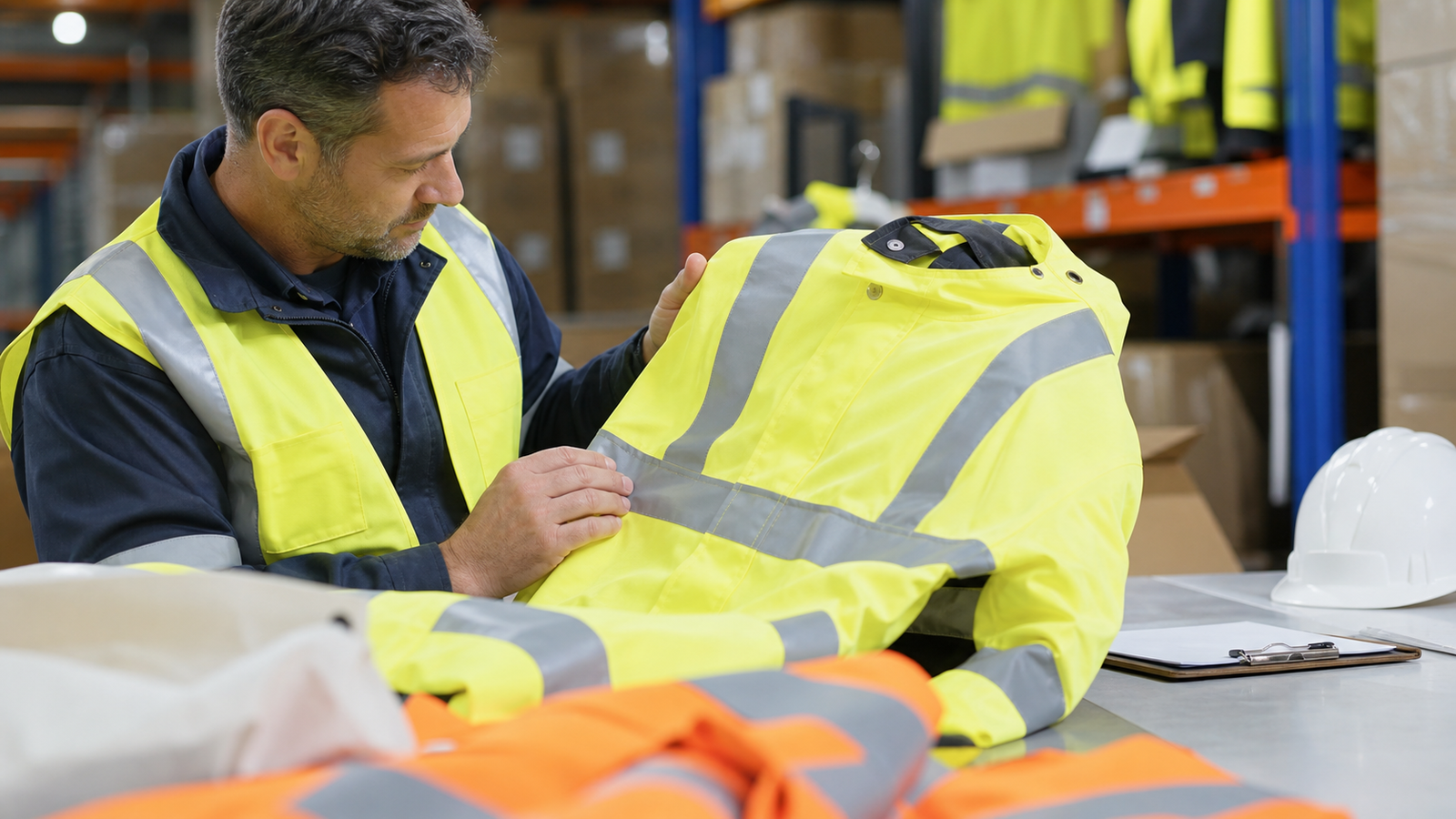
High-visibility clothing is designed to make the wearer conspicuous in hazardous environments — roadways, construction sites, airports, railways, warehouses, and any location where workers share space with vehicles or heavy machinery.
Standards define the minimum area of fluorescent and retroreflective material a garment must incorporate to ensure the wearer is visible in both daylight and low-light conditions. Without these standards, there would be no reliable way to verify that a garment actually provides adequate visibility.
EN ISO 20471: The European Standard
EN ISO 20471 is the primary standard for high-visibility clothing in Europe and is widely adopted globally. It specifies requirements for color, retroreflection, minimum areas of visible material, and garment design.
The Three Classes of EN ISO 20471
| Class | Min. Fluorescent Material | Min. Retroreflective Material | Typical Garments | Risk Level |
|---|---|---|---|---|
| Class 1 | 0.14 m² | 0.10 m² | Vests, bands, armbands | Low risk (e.g., parking attendants) |
| Class 2 | 0.50 m² | 0.13 m² | Vests, shirts, jackets | Medium risk (e.g., warehouse workers) |
| Class 3 | 0.80 m² | 0.20 m² | Jackets, coveralls, full suits | High risk (e.g., road workers, railways) |
Key principle: The higher the risk, the higher the class required. Workers on or near active roadways, railways, or airfields must wear Class 3 garments.
Color Requirements
EN ISO 20471 permits three fluorescent background colors:
- Fluorescent yellow-green — Most common; best daytime visibility
- Fluorescent orange-red — Common in road construction and rail
- Fluorescent red — Used in specific applications (e.g., emergency services in some countries)
Retroreflective Tape Requirements
Retroreflective tape must encircle the torso and, for Class 3 garments, the sleeves and/or legs. The tape must meet specific minimum widths (50 mm for horizontal bands) and be arranged so the wearer is visible from all angles — front, back, and sides.
ANSI/ISEA 107: The North American Standard
ANSI/ISEA 107-2020 (American National Standards Institute / International Safety Equipment Association) is the governing standard for high-visibility safety apparel in the United States and Canada.
ANSI/ISEA 107 Garment Types
Unlike EN ISO 20471’s class-only system, ANSI/ISEA 107 categorizes garments by type (purpose) and class (visibility level):
| Type | Purpose | Examples |
|---|---|---|
| Type O (Off-road) | Workers not on roadways | Warehouse, yard, parking lot workers |
| Type R (Roadway) | Workers near roads but not flagging | Road maintenance, utility workers |
| Type P (Public Safety) | Emergency responders | Police, fire, EMS personnel |
ANSI/ISEA 107 Performance Classes
| Class | Fluorescent Material | Retroreflective Material | Combined Performance Material |
|---|---|---|---|
| Class 1 | 217 in² | 155 in² | — |
| Class 2 | 775 in² | 201 in² | — |
| Class 3 | 1,240 in² | 310 in² | — |
Class 3 provides the highest visibility and is mandatory for roadway workers in most US jurisdictions under MUTCD (Manual on Uniform Traffic Control Devices) requirements.
EN ISO 20471 vs ANSI/ISEA 107: Key Differences
| Aspect | EN ISO 20471 | ANSI/ISEA 107 |
|---|---|---|
| Region | Europe (global adoption) | North America |
| Classification | 3 classes only | 3 types + 3 classes |
| Measurement units | Metric (m²) | Imperial (in²) |
| Color options | 3 fluorescent colors | 3 fluorescent colors (similar) |
| Garment design rules | Detailed (band placement, width) | Performance-based (area minimums) |
| Testing | Wash cycles, color fastness, retroreflection | Similar testing protocol |
Important: A garment certified to EN ISO 20471 Class 3 is not automatically compliant with ANSI/ISEA 107 Class 3, and vice versa. If you supply workers in both European and North American markets, you may need dual-certified garments or separate product lines.
Other Hi-Vis Standards Around the World
| Standard | Region | Notes |
|---|---|---|
| CSA Z96-15 | Canada | Canadian standard; closely aligned with ANSI/ISEA 107 |
| AS/NZS 4602.1:2011 | Australia / New Zealand | Defines Day, Night, and Day/Night garment categories |
| EN 17353:2020 | Europe | Non-professional visibility wear (e.g., cyclists, pedestrians) |
| IS 15809:2017 | India | Based on EN ISO 20471 framework |
How to Choose the Right Standard and Class
Selecting the correct hi-vis garment depends on three factors:
- Geography — Where will the garment be worn? Europe requires EN ISO 20471; North America requires ANSI/ISEA 107; Australia requires AS/NZS 4602.1.
- Risk level — Workers near active traffic or heavy machinery need the highest class (Class 3). Workers in low-traffic or controlled environments may be adequately protected at Class 1 or 2.
- Working conditions — Night work, poor weather, and complex backgrounds (e.g., lots of signage) all increase the need for higher retroreflective performance.
Choosing a Hi-Vis Manufacturer: What to Look For
Not all hi-vis garments are created equal. When sourcing from a work uniform manufacturer, verify:
- Garments are tested and certified to the specific standard required (not just claimed)
- Test reports from accredited labs (SGS, Intertek, Bureau Veritas) are available
- Retroreflective tape meets the required wash-cycle durability (typically 25–50 washes)
- Fluorescent fabric maintains color fastness after laundering
- The manufacturer has experience producing hi-vis garments (ask for references)
- Custom designs maintain the required minimum areas of visible material
UniWorkWear Hi-Vis Capabilities
UniWorkWear manufactures a full range of hi-vis workwear certified to EN ISO 20471 and ANSI/ISEA 107. Our capabilities include:
- Class 1, 2, and 3 garments — Vests, jackets, shirts, trousers, coveralls, and rain wear
- Custom design — Full OEM/ODM service to develop hi-vis garments to your exact specifications
- Dual certification — Garments designed to meet both EN ISO 20471 and ANSI/ISEA 107 where required
- In-house testing — Retroreflective and fluorescent material tested for wash durability and color fastness
- Premium materials — 3M Scotchlite retroreflective tape and certified fluorescent fabrics
Need hi-vis workwear that meets your regional standard?
Frequently Asked Questions
- What is the difference between Class 2 and Class 3 hi-vis?
- Class 3 garments require significantly more fluorescent and retroreflective material than Class 2, making the wearer visible from a greater distance and from more angles. Class 3 is required for workers on or near active roadways.
- Can a hi-vis vest meet Class 3?
- Under EN ISO 20471, a vest alone typically cannot achieve Class 3 because it lacks sleeves and thus insufficient retroreflective area. A Class 3 garment usually requires sleeves (jacket or coverall). Under ANSI/ISEA 107, similar area requirements apply.
- How many washes should hi-vis workwear withstand?
- EN ISO 20471 requires garments to maintain performance after a minimum number of wash cycles (typically 25–50, depending on the garment type). Retroreflective tape and fluorescent fabric must be tested after washing to confirm they still meet the standard.
- Is EN ISO 20471 accepted in the United States?
- EN ISO 20471 is not officially recognized by US regulatory bodies (OSHA, MUTCD). Workers in the US must wear ANSI/ISEA 107-compliant garments. However, many EN ISO 20471 garments meet or exceed ANSI requirements — dual certification is possible.
- What color should I choose for hi-vis workwear?
- Fluorescent yellow-green provides the best daytime visibility in most environments. Fluorescent orange-red is preferred for road construction and rail applications. Your choice may also be dictated by industry regulations or company policy.
Final Thoughts
Hi-vis workwear standards exist to protect lives. Understanding the difference between EN ISO 20471 and ANSI/ISEA 107, knowing which class your workers need, and sourcing from a certified manufacturer are not optional steps — they are essential responsibilities.
Partner with a manufacturer who understands these standards inside and out, tests every batch, and can produce custom hi-vis garments that meet the exact requirements of your market and your workforce.