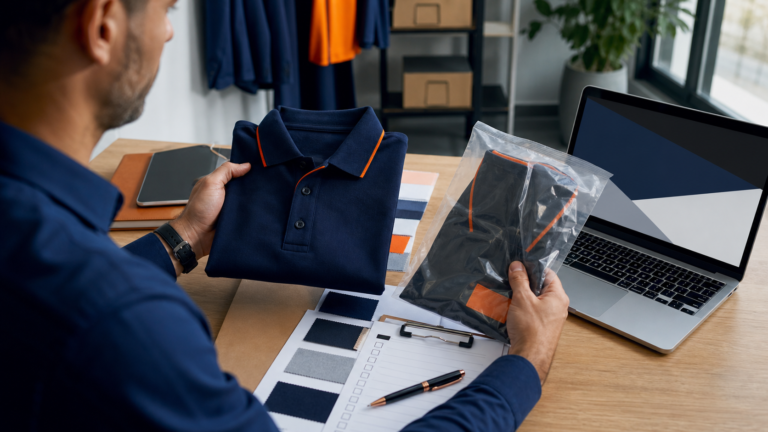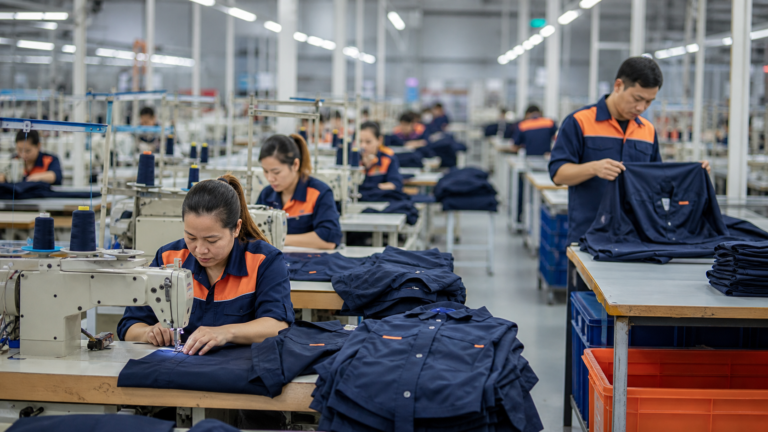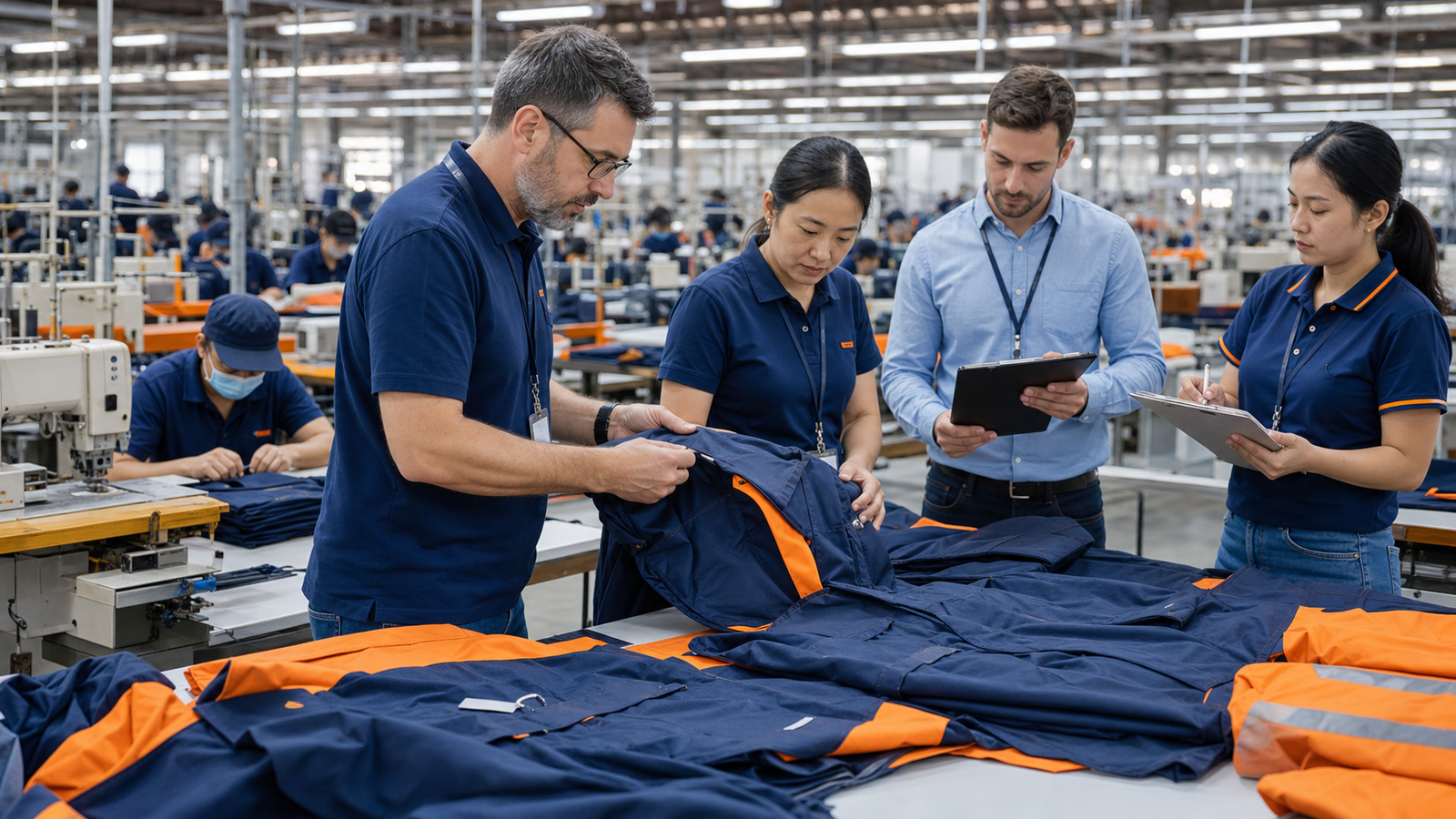
Selecting the right work uniform manufacturer is one of the most consequential decisions a procurement team can make. The wrong choice leads to inconsistent quality, missed deadlines, blown budgets, and workers wearing uniforms that fall apart after a dozen washes. The right choice gives you a dependable supply chain partner that protects your brand, your workforce, and your bottom line for years to come.
Whether you are sourcing high-visibility safety wear, hospitality uniforms, or industrial coveralls, this guide walks you through every factor that separates a world-class manufacturer from a risky one — and gives you a practical checklist you can use before signing any agreement.
Why Your Manufacturer Choice Matters More Than You Think
Work uniforms are not commodity products. They sit at the intersection of brand identity, worker safety, and regulatory compliance. A uniform that fades after three months tells your clients you cut corners. A reflective vest that fails EN ISO 20471 testing can result in fines — or worse, an on-site fatality.
The manufacturer you choose controls fabric sourcing, dye consistency, stitching durability, and every quality checkpoint between raw material and finished garment. A direct partnership with a capable factory means you influence all of those variables. A blind purchase through a middleman means you control none of them.
8 Critical Factors to Evaluate Before Choosing a Uniform Manufacturer
1. Certifications and Compliance
Before anything else, verify that the manufacturer holds the certifications relevant to your industry and target market. At minimum, look for:
- ISO 9001 — Quality management systems
- ISO 14001 — Environmental management
- BSCI / Sedex / WRAP — Social compliance and ethical manufacturing
- OEKO-TEX Standard 100 — Harmful-substance-free textiles
- Product-specific standards — EN ISO 20471 for hi-vis, EN 11612 for flame-retardant, ANSI/ISEA 107 for North America
Ask for current, valid certificates — not expired ones. A genuine factory will share these without hesitation.
2. Minimum Order Quantities (MOQs)
MOQs reveal a lot about a manufacturer’s flexibility. Very low MOQs (under 100 units) often indicate a small workshop. Extremely high MOQs (10,000+ per style) signal a mass-production facility optimized for fast fashion rather than specialty workwear.
For professional work uniforms, a reasonable MOQ range is 300–1,000 units per style per color. This ensures efficient production runs while accommodating growing brands.
Our standard MOQ starts at 500 pieces per style, but we regularly accommodate pilot runs of 300 pieces for new customers.
3. Customization and OEM/ODM Capability
A manufacturer that only offers a fixed catalog is a vendor, not a partner. True OEM/ODM capability means the factory can:
- Develop garments from your technical drawings or concept sketches
- Source and test custom fabrics (weight, weave, finish, color)
- Apply your branding through embroidery, screen printing, heat transfer, sublimation, or woven labels
- Adjust patterns for regional sizing standards (EU, US, UK, Asian)
- Integrate functional details — tool loops, knee-pad pockets, ventilation panels, radio loops
4. Lead Times and Production Capacity
Transparent lead times are a hallmark of a well-managed factory:
| Stage | Typical Duration |
|---|---|
| Sampling & approval | 10–15 days |
| Fabric sourcing (stock) | 5–7 days |
| Fabric sourcing (custom dye) | 15–25 days |
| Production (1,000–5,000 pcs) | 20–30 days |
| QC inspection & packing | 3–5 days |
| Total (standard order) | 45–60 days |
5. Sampling Process
- Initial samples — Proof-of-concept garments in approximate fabric
- Pre-production samples (PP samples) — Exact fabric, trims, printing for final approval
- Size-set samples — The complete size range for fit testing
- Top-of-production (TOP) samples — Pulled from the actual production line to confirm consistency
Sampling fees are standard (typically USD 50–150 per style). Manufacturers who refuse to sample are a significant risk.
6. Pricing Transparency
The lowest quote is almost never the best deal. Ensure each manufacturer’s quote includes:
- Fabric type, weight, and composition
- All trims (zippers, buttons, reflective tape, Velcro)
- Branding (embroidery, printing)
- Labeling (care labels, size labels, hang tags)
- Individual polybag packing vs. bulk packing
- Carton packing, shipping marks, and compliance documentation
7. Communication and Responsiveness
Evaluate: response time (within 24 hours), English proficiency, dedicated account managers, willingness to do video calls and virtual factory tours, and use of professional project management tools.
8. Quality Control Systems
- Incoming material inspection — Fabric weight, color, defects
- In-line inspection — Stitching, seam strength, measurements
- Final inspection — AQL 2.5 sampling before packing
- Lab testing — Color fastness, shrinkage, tensile strength, pilling resistance
Red Flags to Watch For
- No factory address or verifiable location
- Reluctance to share certifications
- Prices significantly below market
- No sampling process
- Pushback on third-party inspections
- Promises of impossibly short lead times
- No references or case studies
- Communication blackouts
Your Manufacturer Selection Checklist
- Valid ISO 9001 and relevant product certifications confirmed
- Social compliance audit (BSCI, Sedex, or WRAP) current
- MOQ is realistic for your order volume
- Full OEM/ODM capability with past custom project examples
- Lead times documented in writing with milestone dates
- PP sample approved before bulk production begins
- Price breakdown is itemized and transparent
- Dedicated English-speaking account manager assigned
- QC process documented with AQL standards specified
- Factory address verified via Google Maps or video call
- Third-party inspections welcomed
- Payment terms are reasonable
- References from at least two current clients
- Clear warranty or rework policy for defective goods
How UniWorkWear Meets Every Criterion
UniWorkWear has operated as a factory-direct work uniform manufacturer from Shenzhen, China since 2011. We hold ISO 9001, BSCI, and OEKO-TEX certifications. Our in-house design team handles full OEM and ODM development, and our QC lab runs every batch through color fastness, shrinkage, and tensile testing before shipment.
We offer transparent pricing, dedicated bilingual account managers, and a sampling process that ensures you approve every detail before bulk production starts. Explore our full certifications page or request a virtual factory tour.
Ready to source directly from a certified work uniform manufacturer?
Final Thoughts
Choosing a work uniform manufacturer is not a commodity purchasing decision — it is a strategic partnership. The eight factors give you a framework to evaluate any factory objectively, and the checklist ensures nothing falls through the cracks.
Take the time to verify, sample, and build the relationship before scaling. The effort you invest upfront pays dividends in consistent quality, reliable delivery, and a supply chain you can trust for years to come.