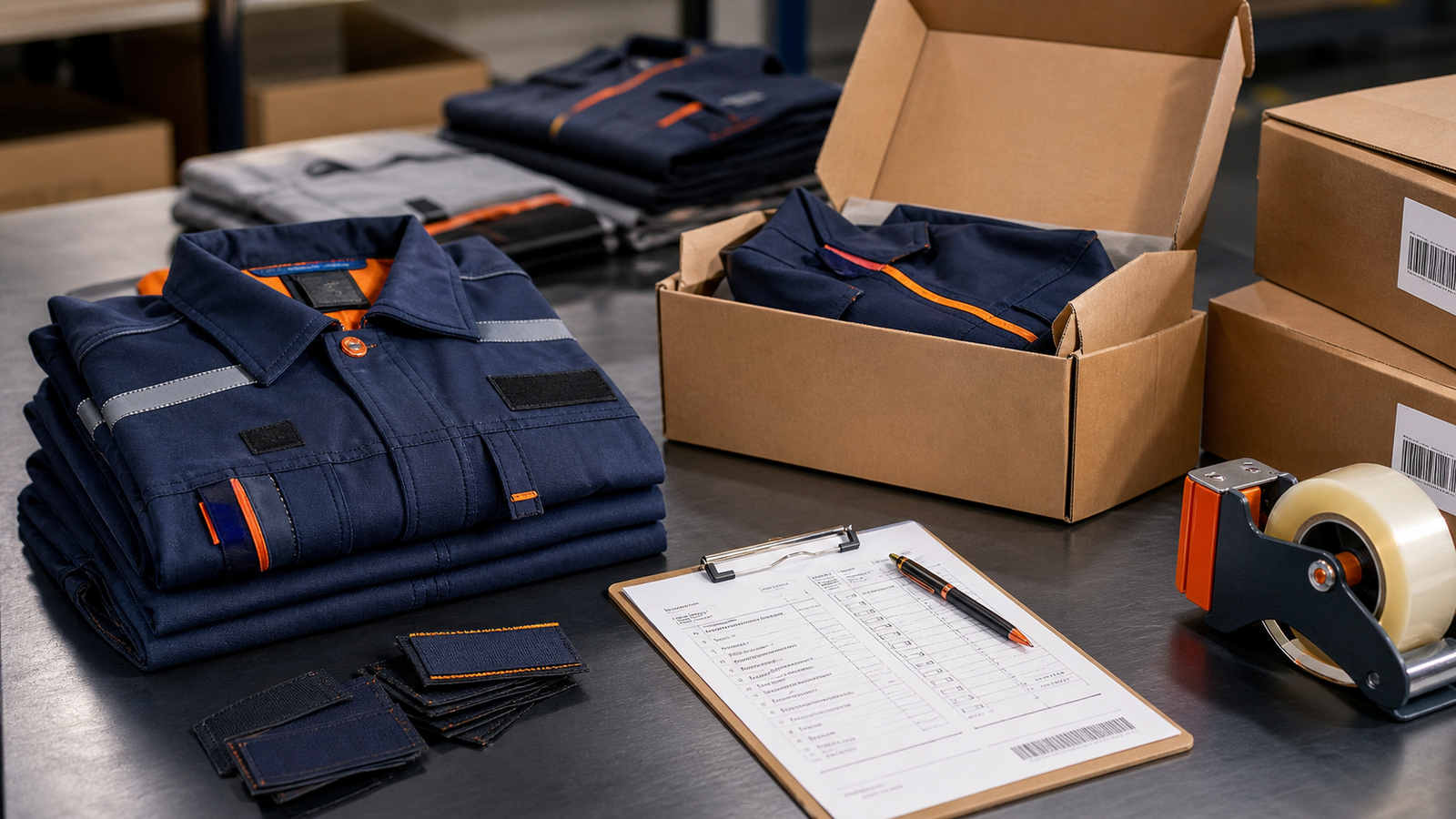
Private-label packaging is part of the product specification, not a final decoration added after production. Incorrect size stickers, missing care labels, unreadable barcodes, or mixed carton quantities can delay receiving and create expensive rework at the destination.
This checklist helps distributors and brands define packaging before sample approval and bulk production.
Map the Complete Packaging System
List every component from the label sewn into the garment to the shipping mark printed on the export carton. Assign an artwork version and approval status to each item.
- Main brand or neck label
- Size label
- Care and fibre-content label
- Country-of-origin label where required
- Hangtag and attachment method
- Barcode, SKU, or retail price sticker
- Individual or bulk polybag
- Inner carton or assortment packaging
- Export carton and shipping marks
Garment Labels
Confirm label material, dimensions, fold type, colours, text, placement, and sewing method. Care information should match the actual garment materials and decoration. Verify local requirements with the importer or compliance adviser for the destination market.
Hangtags and Retail Information
Provide print-ready artwork and identify front, back, hole position, string or fastener, and placement. If multiple languages, currencies, or market-specific claims are required, separate the versions using clear SKU rules.
Barcode and SKU Control
| Item | Approval check |
|---|---|
| Barcode type | Correct symbology and number source |
| Human-readable text | Matches encoded number |
| SKU description | Style, colour, and size are accurate |
| Placement | Visible without damaging packaging |
| Print quality | Scan test completed at production size |
Send barcode data electronically rather than retyping it. Ask for a scan test from printed production labels, not only a PDF proof.
Polybags and Folding
Specify bag dimensions, thickness, material, closure, ventilation or warning text where applicable, recycling marks, and sticker position. Provide a folding diagram or approved packed sample for garments that must fit shelves, bins, or e-commerce fulfilment dimensions.
Carton Assortment
Choose solid-size, solid-colour, or mixed assortment cartons based on how the goods will be received and distributed. The packing list should mirror carton contents exactly.
Define maximum carton weight and dimensions, units per carton, liner requirements, moisture protection, and whether cartons need straps or palletisation. Avoid changing carton quantities after barcode and packing-list preparation without updating all records.
Shipping Marks and Documentation
Provide consignee marks, purchase-order number, carton sequence, style, colour, size range, quantities, net and gross weight, dimensions, and country of origin as required. Align terminology across purchase order, commercial invoice, packing list, and carton labels.
Approve a Packed Sample
Before bulk packing, approve one complete packed garment and one representative carton label. Check appearance, scanability, count, dimensions, protection, and unpacking experience. For complex distributor programs, conduct a packing audit during production.
Create a Reorder-Ready Packaging File
Store editable artwork, approved PDFs, barcode data, packaging specifications, photographs, and the final packing list format under controlled version numbers. This prevents old artwork returning on a repeat order.
UNIWORKWEAR supports custom labels, hangtags, polybags, carton markings, and export documentation. Review our packaging and logistics capabilities or request a private-label quotation.