Fabric weight is one of the first specifications a workwear buyer sees, but it is also one of the easiest to misunderstand. A higher GSM does not automatically mean a better garment, and a lower GSM does not necessarily mean poor durability. The correct weight depends on fibre composition, weave, garment construction, climate, job movement, and the intended wash cycle.
This guide explains how to use GSM as part of a complete fabric specification when requesting samples or comparing quotations from a workwear manufacturer.
What Does GSM Mean in Workwear Fabric?
GSM means grams per square metre. It measures how much one square metre of fabric weighs. It is a useful comparison point, but it does not describe fibre strength, tear resistance, stretch, air permeability, colourfastness, or shrinkage by itself.
Two fabrics can share the same GSM and perform differently. A tightly woven polyester-cotton twill may feel firmer than a knitted polo fabric of the same weight. A stretch blend may use a lighter construction while maintaining good recovery and mobility.
Typical Workwear Weight Ranges
| Approximate range | Common applications | Buyer considerations |
|---|---|---|
| 120–170 GSM | Light shirts, tropical uniforms, some hi-vis tops | Breathability, opacity, snag resistance |
| 170–230 GSM | Polos, service shirts, scrub fabrics, light trousers | Comfort, structure, wash stability |
| 230–300 GSM | Work trousers, jackets, drill shirts, coveralls | Abrasion zones, mobility, drying time |
| 300+ GSM | Heavy outerwear, cold-weather layers, specialist garments | Bulk, heat stress, layering, cost |
These ranges are starting points rather than universal rules. Your approved sample and test requirements should remain the final reference.
Match Weight to Climate and Activity
Hot and humid environments
Prioritise breathability, moisture movement, ventilation, and fast drying. A lighter fabric may improve wearer compliance because employees are more likely to keep the garment on correctly. Check that light colours remain sufficiently opaque and that seams are stable after repeated washing.
Temperate indoor and mixed-use work
Midweight fabrics often offer the best balance for hospitality, logistics, healthcare support, and corporate workwear. They provide structure without excessive heat and can support embroidery or heat-transfer branding.
Cold, abrasive, or outdoor work
Heavier fabric can help, but layering is usually more flexible than relying on one very heavy garment. Specify reinforcement, outerwear compatibility, and movement at the knees, elbows, and shoulders.
GSM Is Only One Part of Durability
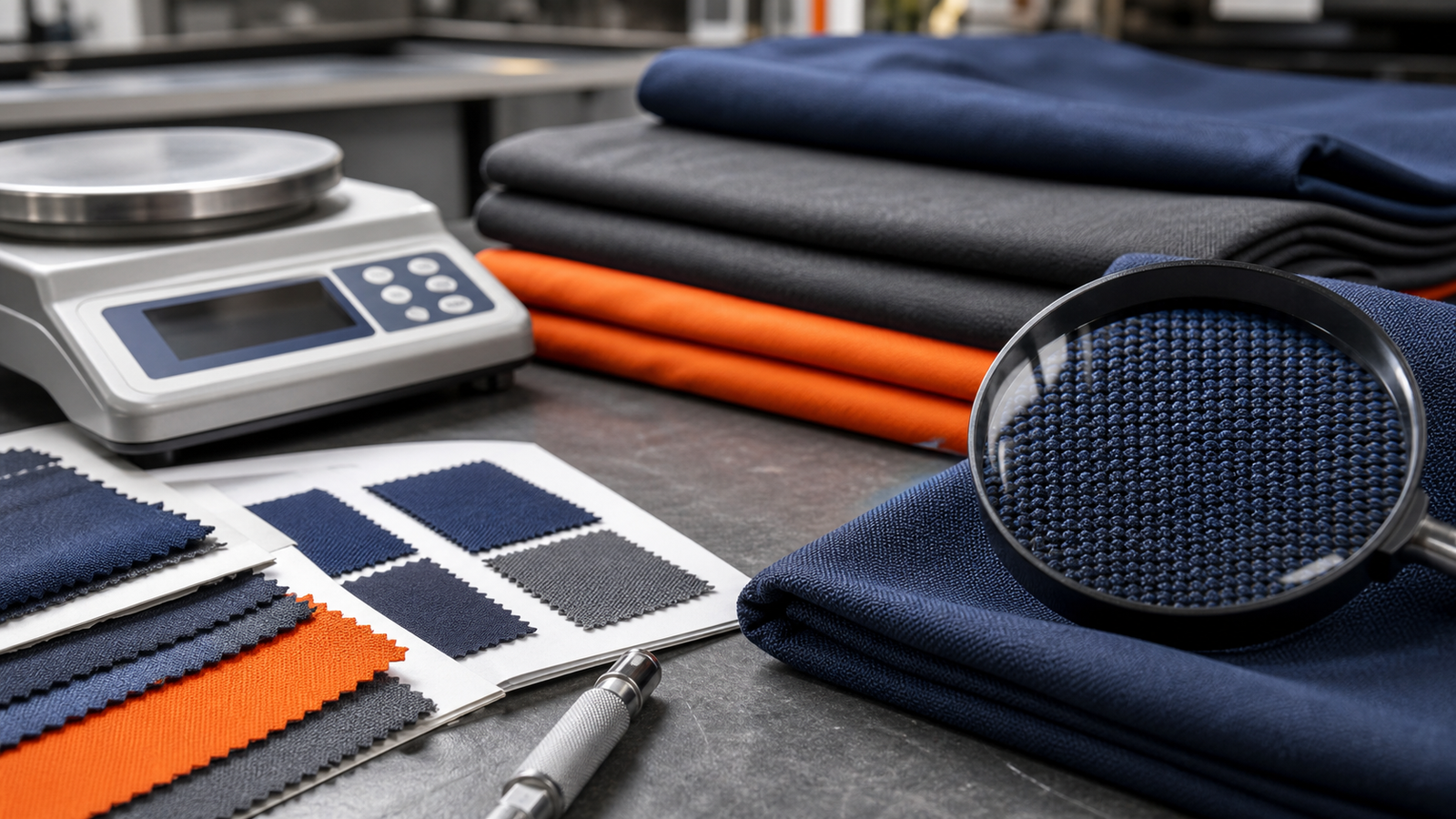
When comparing fabrics, request information about fibre composition, yarn construction, weave or knit, shrinkage, colourfastness, pilling, tensile or tear performance where relevant, and the recommended wash method. Also review seam type, stitch density, reinforcement, and trim quality.
- Ask for the actual fabric specification used in the sample.
- Test the complete garment, not only a loose fabric swatch.
- Wash the sample using the intended laundry process.
- Check measurements before and after washing.
- Approve colour and hand feel under consistent lighting.
How to Write a Better Fabric Request
Instead of asking for “the strongest 240 GSM fabric,” describe the application: wearer role, climate, hours worn, movement, hazards, wash frequency, branding method, target feel, and price level. This gives the factory enough context to propose a suitable construction.
A useful fabric brief connects measurable requirements to the job the garment must perform.
Approve the Fabric Before Bulk Production
Use a pre-production sample made in the nominated bulk fabric. Record composition, GSM tolerance, colour reference, finish, and approved test results in the specification pack. For repeat orders, retain an approved garment as the physical standard.
Need help comparing fabrics? Request a sample or send your workwear brief to our export team.