Skip to article
Request SamplesGet a Quote
HomeAbout / FactoryProductsWorkwear SolutionsCustomizationPrivate Label / OEMQuality ControlBlogContactGet a Quote

Category: Procurement Guides

Practical specifications, sampling, sizing, and sourcing guidance for B2B uniform buyers.

  • Workwear Fabric Weight Explained: A Practical GSM Guide for B2B Buyers

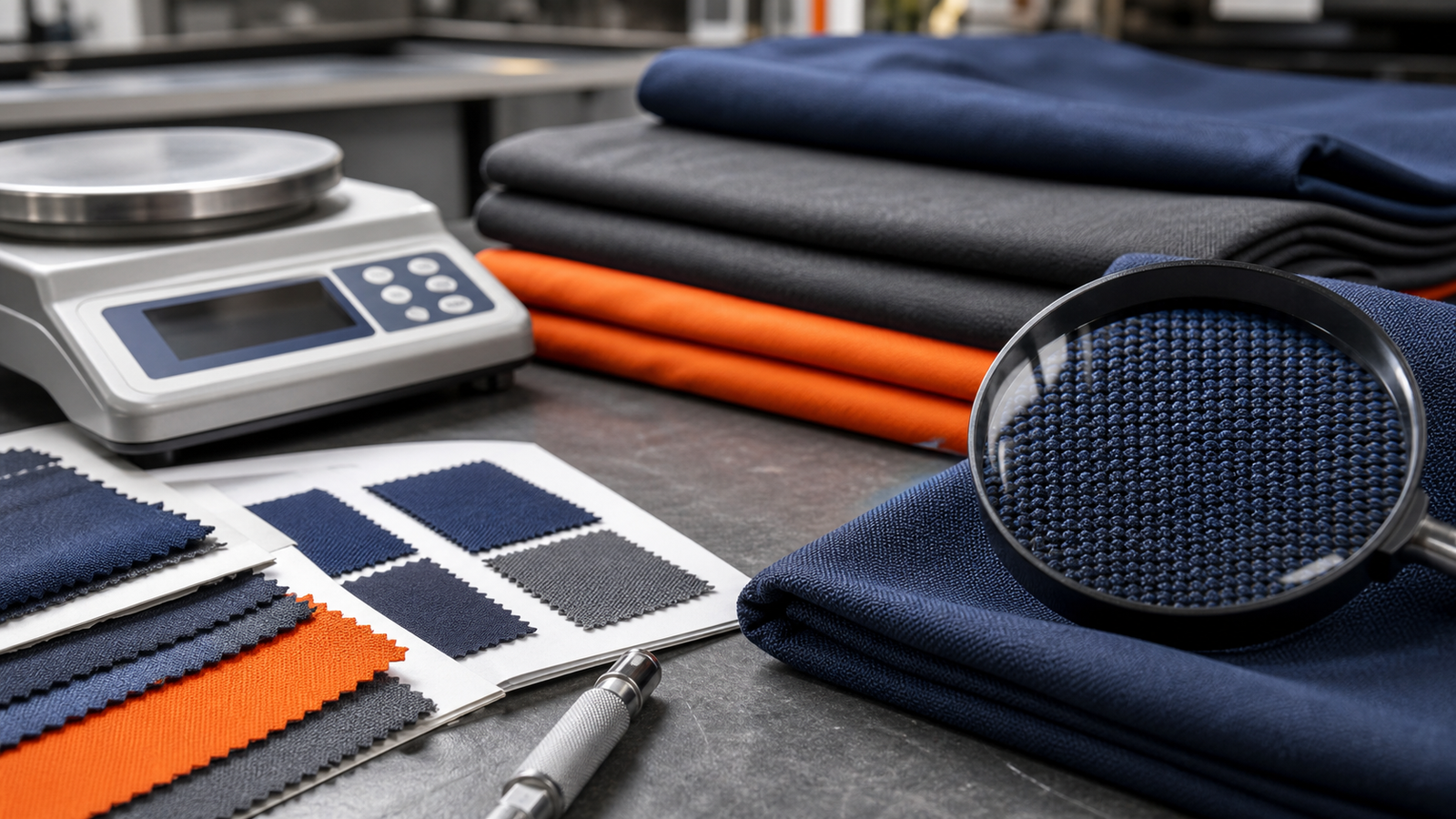
    Fabric weight is one of the first specifications a workwear buyer sees, but it is also one of the easiest to misunderstand. A higher GSM does not automatically mean a better garment, and a lower GSM does not necessarily mean poor durability. The correct weight depends on fibre composition, weave, garment construction, climate, job movement, and the intended wash cycle.

    This guide explains how to use GSM as part of a complete fabric specification when requesting samples or comparing quotations from a workwear manufacturer.

    What Does GSM Mean in Workwear Fabric?

    GSM means grams per square metre. It measures how much one square metre of fabric weighs. It is a useful comparison point, but it does not describe fibre strength, tear resistance, stretch, air permeability, colourfastness, or shrinkage by itself.

    Two fabrics can share the same GSM and perform differently. A tightly woven polyester-cotton twill may feel firmer than a knitted polo fabric of the same weight. A stretch blend may use a lighter construction while maintaining good recovery and mobility.

    Typical Workwear Weight Ranges

    Approximate range Common applications Buyer considerations
    120–170 GSM Light shirts, tropical uniforms, some hi-vis tops Breathability, opacity, snag resistance
    170–230 GSM Polos, service shirts, scrub fabrics, light trousers Comfort, structure, wash stability
    230–300 GSM Work trousers, jackets, drill shirts, coveralls Abrasion zones, mobility, drying time
    300+ GSM Heavy outerwear, cold-weather layers, specialist garments Bulk, heat stress, layering, cost

    These ranges are starting points rather than universal rules. Your approved sample and test requirements should remain the final reference.

    Match Weight to Climate and Activity

    Hot and humid environments

    Prioritise breathability, moisture movement, ventilation, and fast drying. A lighter fabric may improve wearer compliance because employees are more likely to keep the garment on correctly. Check that light colours remain sufficiently opaque and that seams are stable after repeated washing.

    Temperate indoor and mixed-use work

    Midweight fabrics often offer the best balance for hospitality, logistics, healthcare support, and corporate workwear. They provide structure without excessive heat and can support embroidery or heat-transfer branding.

    Cold, abrasive, or outdoor work

    Heavier fabric can help, but layering is usually more flexible than relying on one very heavy garment. Specify reinforcement, outerwear compatibility, and movement at the knees, elbows, and shoulders.

    GSM Is Only One Part of Durability

    When comparing fabrics, request information about fibre composition, yarn construction, weave or knit, shrinkage, colourfastness, pilling, tensile or tear performance where relevant, and the recommended wash method. Also review seam type, stitch density, reinforcement, and trim quality.

    • Ask for the actual fabric specification used in the sample.
    • Test the complete garment, not only a loose fabric swatch.
    • Wash the sample using the intended laundry process.
    • Check measurements before and after washing.
    • Approve colour and hand feel under consistent lighting.

    How to Write a Better Fabric Request

    Instead of asking for “the strongest 240 GSM fabric,” describe the application: wearer role, climate, hours worn, movement, hazards, wash frequency, branding method, target feel, and price level. This gives the factory enough context to propose a suitable construction.

    A useful fabric brief connects measurable requirements to the job the garment must perform.

    Approve the Fabric Before Bulk Production

    Use a pre-production sample made in the nominated bulk fabric. Record composition, GSM tolerance, colour reference, finish, and approved test results in the specification pack. For repeat orders, retain an approved garment as the physical standard.

    Need help comparing fabrics? Request a sample or send your workwear brief to our export team.
  • How to Plan a Uniform Size Run for a Bulk Order

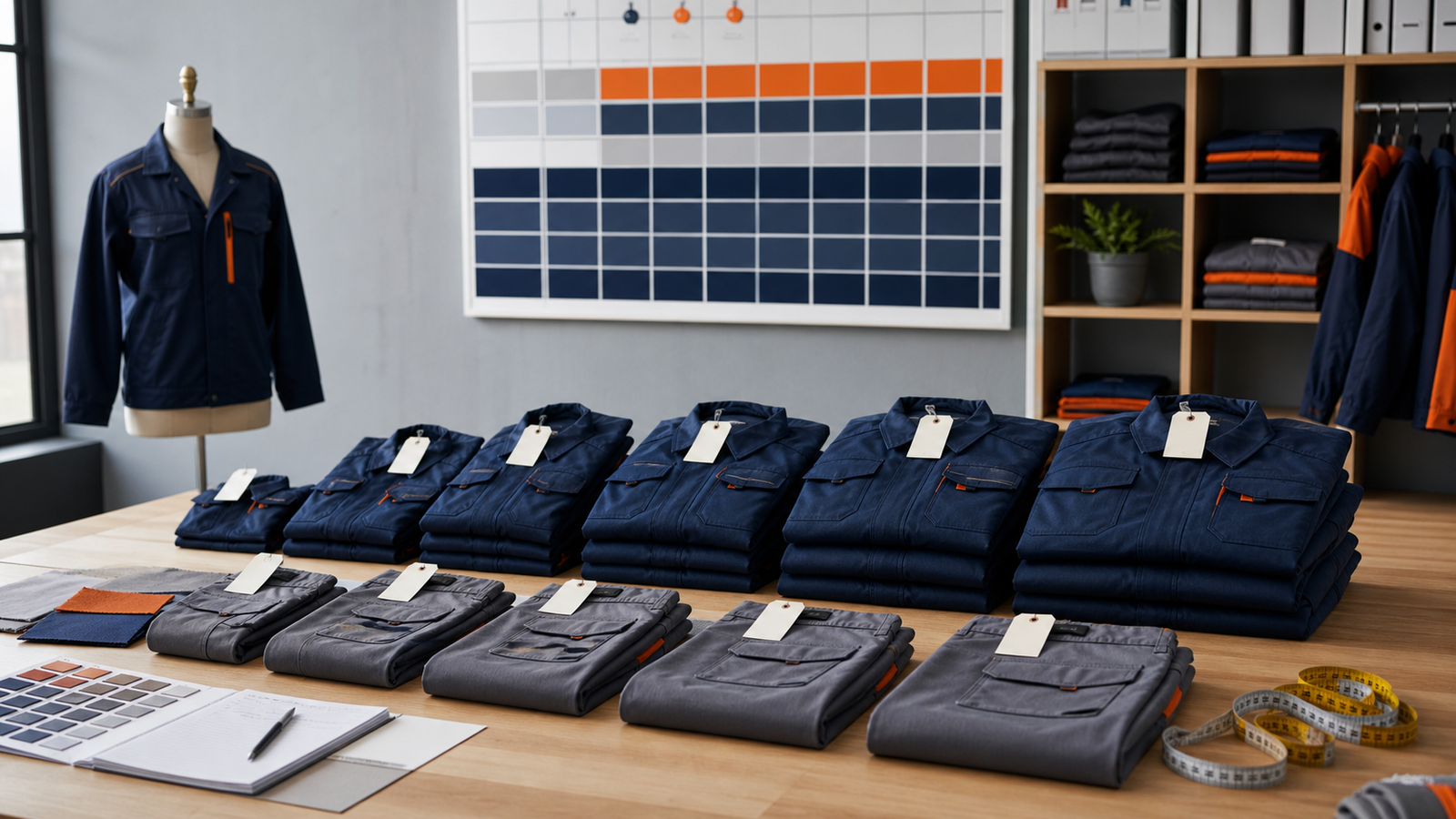
    A well-planned size run reduces two expensive problems: employees who cannot wear the uniform and excess inventory concentrated in the wrong sizes. The process is not simply choosing equal quantities from XS to 5XL. It requires a defined measurement chart, wearer information, fit validation, and a sensible allowance for replacements and new starters.

    Start With One Approved Measurement Chart

    Confirm whether the supplier uses body measurements or finished-garment measurements. A chest measurement taken from a shirt laid flat is not the same as a person’s chest circumference. Record the measurement method, tolerance, garment fit, and units in the specification.

    Do not assume that “Large” is consistent between factories, countries, or garment types. A polo, tailored shirt, jacket, and work trouser may need different ease allowances.

    Collect Useful Wearer Data

    For an existing workforce, use a controlled fitting exercise or an employee order form based on the approved samples. Ask staff to select from the actual size chart rather than their usual retail size.

    • Separate quantities by garment style and fit.
    • Record height or inside-leg options where applicable.
    • Identify maternity, adaptive, or special-fit requirements.
    • Protect employee information and collect only what is necessary.
    • Set a deadline and verify unusual entries before ordering.

    Build the Initial Size Distribution

    Combine confirmed wearer selections with historical issue data if it exists. If no history is available, use sample fittings from a representative group instead of relying on a generic percentage chart.

    Input Why it matters Recommended action
    Current employee selections Best view of immediate demand Validate against approved samples
    Previous issue records Shows repeat demand and common exchanges Remove obsolete styles and duplicates
    New-starter forecast Prevents early stock-outs Add allowance by likely role and size
    Replacement rate Varies by job and garment Use operational history where possible

    Add Allowance Deliberately

    Extra stock should follow expected demand, not be spread evenly. Common middle sizes often need more buffer, while extreme sizes may be better replenished through planned repeat orders. Consider staff growth, turnover, garment damage, seasonal workers, and the supplier’s reorder lead time.

    For custom-dyed or highly branded garments, reorders may require a minimum quantity. Discuss repeat-order support before approving the first order.

    Validate Fit Before Final Quantities

    Run a size-set review using representative sizes from the production pattern. Check mobility in real tasks: reaching, bending, sitting, kneeling, and layering. Confirm sleeve and body lengths, waist comfort, rise, and movement across shoulders.

    Record every approved measurement and tolerance. Verbal feedback such as “make it slightly bigger” is difficult to reproduce. Convert feedback into measurements or pattern adjustments.

    Keep the Size Run Easy to Audit

    Your purchase order should list style, colour, size, quantity, unit price, and total quantity. The factory packing list and carton labels should follow the same structure. For multi-location programs, add destination or department codes before production begins.

    Plan Reorders From Day One

    After distribution, record exchanges, shortages, and unused stock. This becomes the basis for the next order. Retain an approved sample and final measurement chart so the supplier can reproduce the fit consistently.

    UNIWORKWEAR can prepare size sets and custom measurement charts for B2B programs. Request a quote or review our customisation options.

  • Workwear Sample Approval Checklist Before Bulk Production

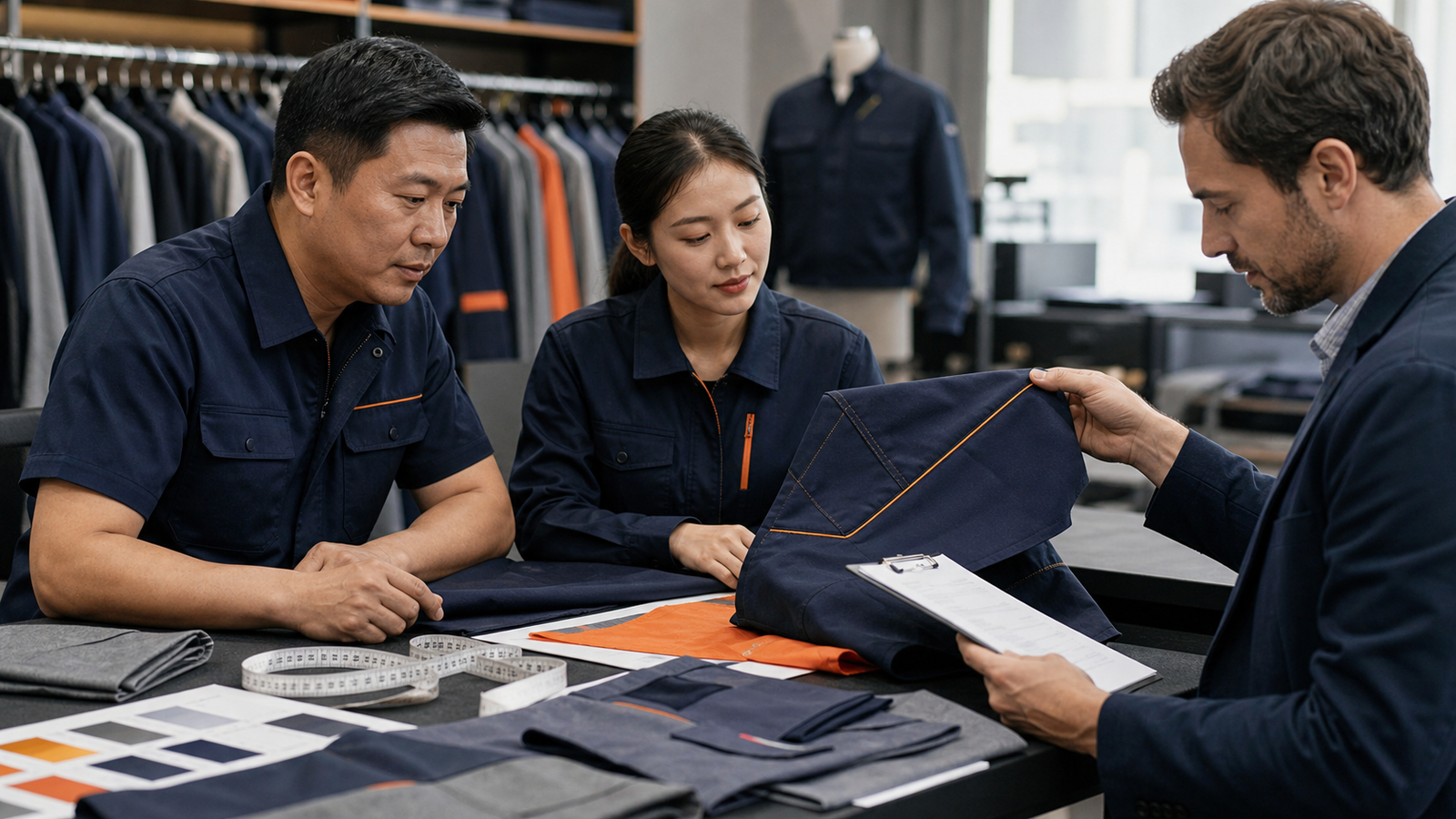
    Sample approval is the point where a visual idea becomes a production standard. If approval is vague, the factory may have no reliable reference when fabric is cut, branding is applied, or finished garments are inspected. A structured checklist protects both buyer and manufacturer.

    Confirm Which Sample You Are Approving

    Development samples, fit samples, size sets, branding samples, and pre-production samples serve different purposes. The final approval should identify the sample version, date, style code, colour, size, and any remaining exceptions.

    1. Measure the Garment

    • Use the agreed points of measurement and method.
    • Compare every critical measurement with the specification.
    • Record actual measurements rather than writing only “approved.”
    • Test movement and layering for the intended job.
    • Confirm tolerances for bulk inspection.

    2. Verify Fabric and Colour

    Confirm fibre composition, nominated fabric code, weight or construction, finish, stretch, hand feel, and colour reference. Review the sample in controlled light and compare it with the approved lab dip or colour standard.

    If washing performance matters, wash the garment before approval. Check shrinkage, twisting, colour loss, pilling, seam appearance, and branding durability.

    3. Review Construction

    Area What to check
    Seams Type, strength, neatness, skipped stitches, seam allowance
    Stress points Bar tacks, reinforcement, pocket corners, belt loops
    Closures Zips, snaps, buttons, hook-and-loop alignment and operation
    Symmetry Pockets, panels, reflective tape, collars, cuffs
    Inside finish Loose threads, raw edges, labels, comfort against skin

    4. Approve Branding at Actual Size

    Check logo dimensions, colours, placement, orientation, stitch or print quality, backing, and appearance on the selected fabric. Approve a physical decoration strike-off where possible. Artwork displayed on a screen is not a substitute for checking the actual result.

    5. Check Trims, Labels, and Packaging

    Verify every visible and functional trim: zip type, puller, buttons, elastic, cord, reflective tape, and thread colour. Review brand labels, size labels, care instructions, country-of-origin wording, hangtags, polybags, carton labels, barcodes, and folding method.

    6. Record Corrections Clearly

    Use photographs with annotations and a numbered comment sheet. Separate mandatory corrections from suggestions. When a revised sample is required, state which previous points must be rechecked.

    Approval should create one unambiguous production reference shared by the buyer, merchandiser, pattern team, production line, and quality inspector.

    7. Sign Off the Production Standard

    The approval record should include the approved sample version, specification version, measurement chart, fabric and colour reference, branding artwork, packaging instructions, approved exceptions, date, and responsible approver.

    Keep one sealed approval sample with the buyer and one with the factory when practical. Use the same reference during inline and pre-shipment inspection.

    What Happens After Approval?

    The manufacturer confirms material availability, production schedule, inspection plan, packaging requirements, and shipping milestone. Any later substitution should require written buyer approval.

    Ready to evaluate quality before ordering? Request a workwear sample or explore the UNIWORKWEAR quality-control process.

  • Private Label Workwear Packaging Checklist for Distributors

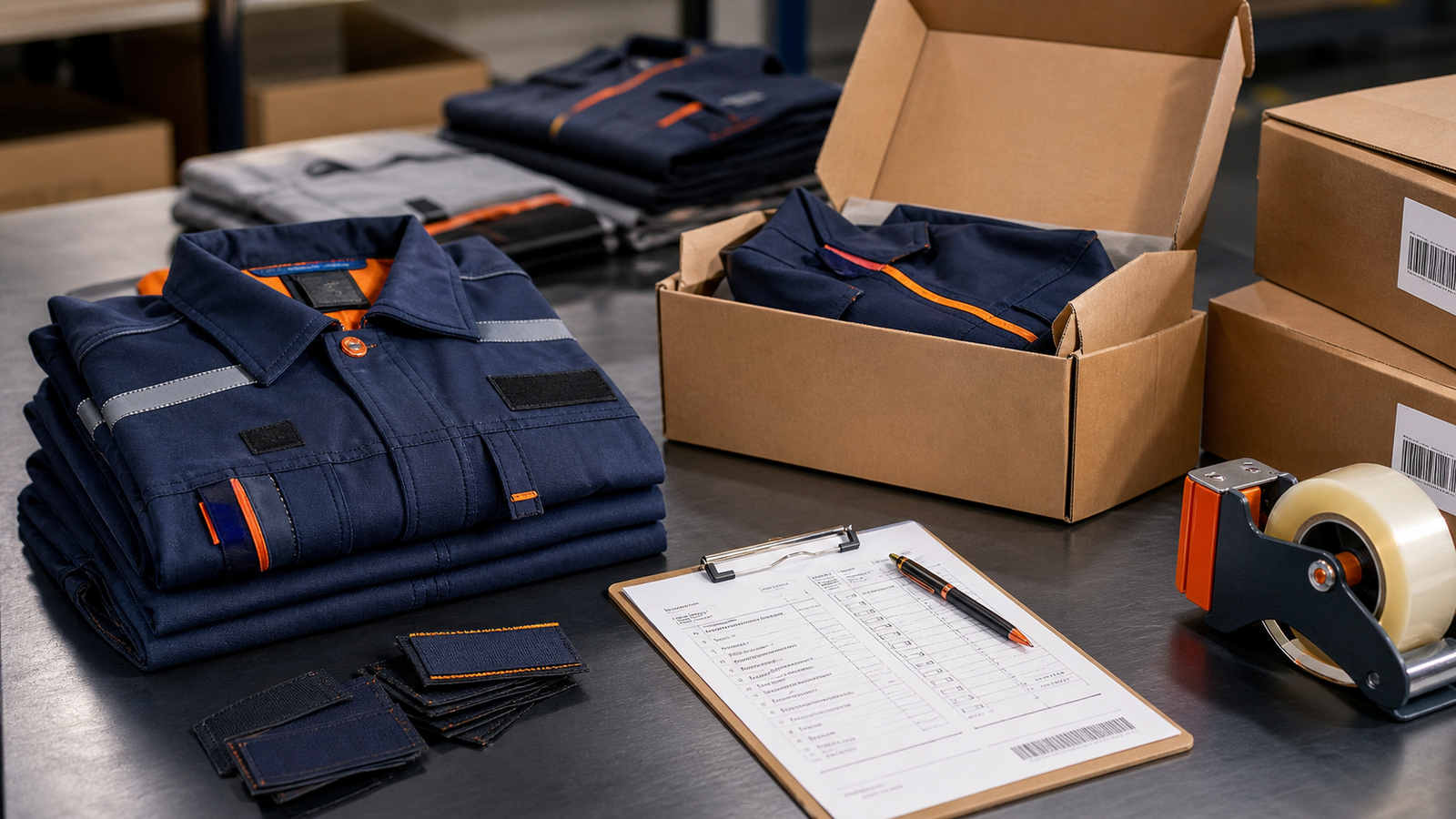
    Private-label packaging is part of the product specification, not a final decoration added after production. Incorrect size stickers, missing care labels, unreadable barcodes, or mixed carton quantities can delay receiving and create expensive rework at the destination.

    This checklist helps distributors and brands define packaging before sample approval and bulk production.

    Map the Complete Packaging System

    List every component from the label sewn into the garment to the shipping mark printed on the export carton. Assign an artwork version and approval status to each item.

    • Main brand or neck label
    • Size label
    • Care and fibre-content label
    • Country-of-origin label where required
    • Hangtag and attachment method
    • Barcode, SKU, or retail price sticker
    • Individual or bulk polybag
    • Inner carton or assortment packaging
    • Export carton and shipping marks

    Garment Labels

    Confirm label material, dimensions, fold type, colours, text, placement, and sewing method. Care information should match the actual garment materials and decoration. Verify local requirements with the importer or compliance adviser for the destination market.

    Hangtags and Retail Information

    Provide print-ready artwork and identify front, back, hole position, string or fastener, and placement. If multiple languages, currencies, or market-specific claims are required, separate the versions using clear SKU rules.

    Barcode and SKU Control

    Item Approval check
    Barcode type Correct symbology and number source
    Human-readable text Matches encoded number
    SKU description Style, colour, and size are accurate
    Placement Visible without damaging packaging
    Print quality Scan test completed at production size

    Send barcode data electronically rather than retyping it. Ask for a scan test from printed production labels, not only a PDF proof.

    Polybags and Folding

    Specify bag dimensions, thickness, material, closure, ventilation or warning text where applicable, recycling marks, and sticker position. Provide a folding diagram or approved packed sample for garments that must fit shelves, bins, or e-commerce fulfilment dimensions.

    Carton Assortment

    Choose solid-size, solid-colour, or mixed assortment cartons based on how the goods will be received and distributed. The packing list should mirror carton contents exactly.

    Define maximum carton weight and dimensions, units per carton, liner requirements, moisture protection, and whether cartons need straps or palletisation. Avoid changing carton quantities after barcode and packing-list preparation without updating all records.

    Shipping Marks and Documentation

    Provide consignee marks, purchase-order number, carton sequence, style, colour, size range, quantities, net and gross weight, dimensions, and country of origin as required. Align terminology across purchase order, commercial invoice, packing list, and carton labels.

    Approve a Packed Sample

    Before bulk packing, approve one complete packed garment and one representative carton label. Check appearance, scanability, count, dimensions, protection, and unpacking experience. For complex distributor programs, conduct a packing audit during production.

    Create a Reorder-Ready Packaging File

    Store editable artwork, approved PDFs, barcode data, packaging specifications, photographs, and the final packing list format under controlled version numbers. This prevents old artwork returning on a repeat order.

    UNIWORKWEAR supports custom labels, hangtags, polybags, carton markings, and export documentation. Review our packaging and logistics capabilities or request a private-label quotation.

W