Author: UNIWORKWEAR

  • Private Label Workwear: The Complete Guide for Brands

    Private Label Workwear: The Complete Guide for Brands

    Private Label Workwear: The Complete Guide for Brands

    Private label workwear lets you sell factory-made uniforms under your own brand name — without owning a factory. It’s how most workwear brands operate, and it’s the fastest path from idea to market.

    This guide covers everything you need to know to launch or scale a private label workwear line.

    What Is Private Label Workwear?

    Private label means a manufacturer produces workwear to your specifications, and you sell it under your brand. The factory handles production. You handle branding, marketing, and sales.

    What you get:

    • Your brand name on every garment
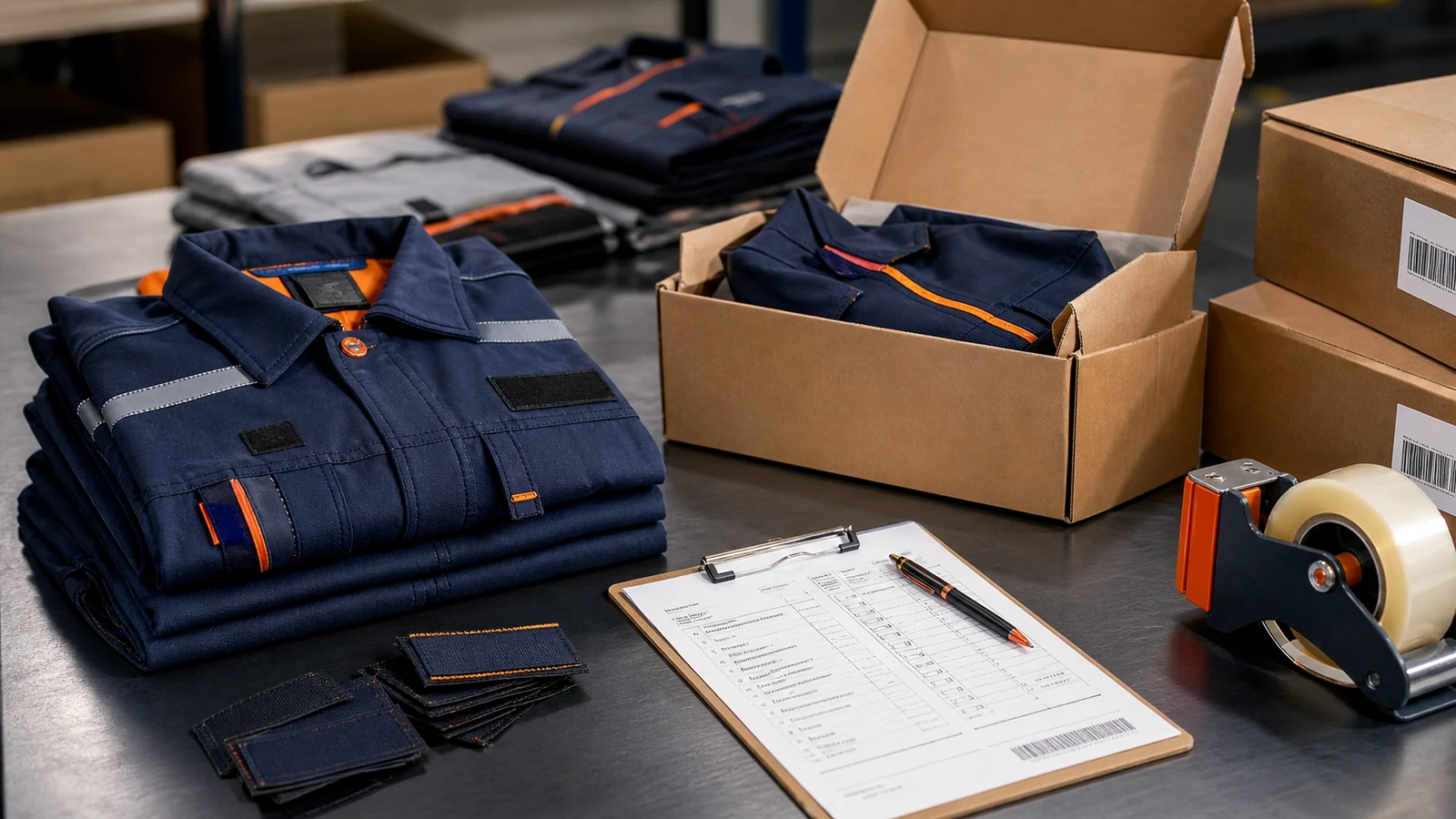
    • Your custom labels (woven, printed, or heat transfer)
    • Your hang tags and packaging
    • Your choice of fabrics, colors, and styles

    What the factory handles:

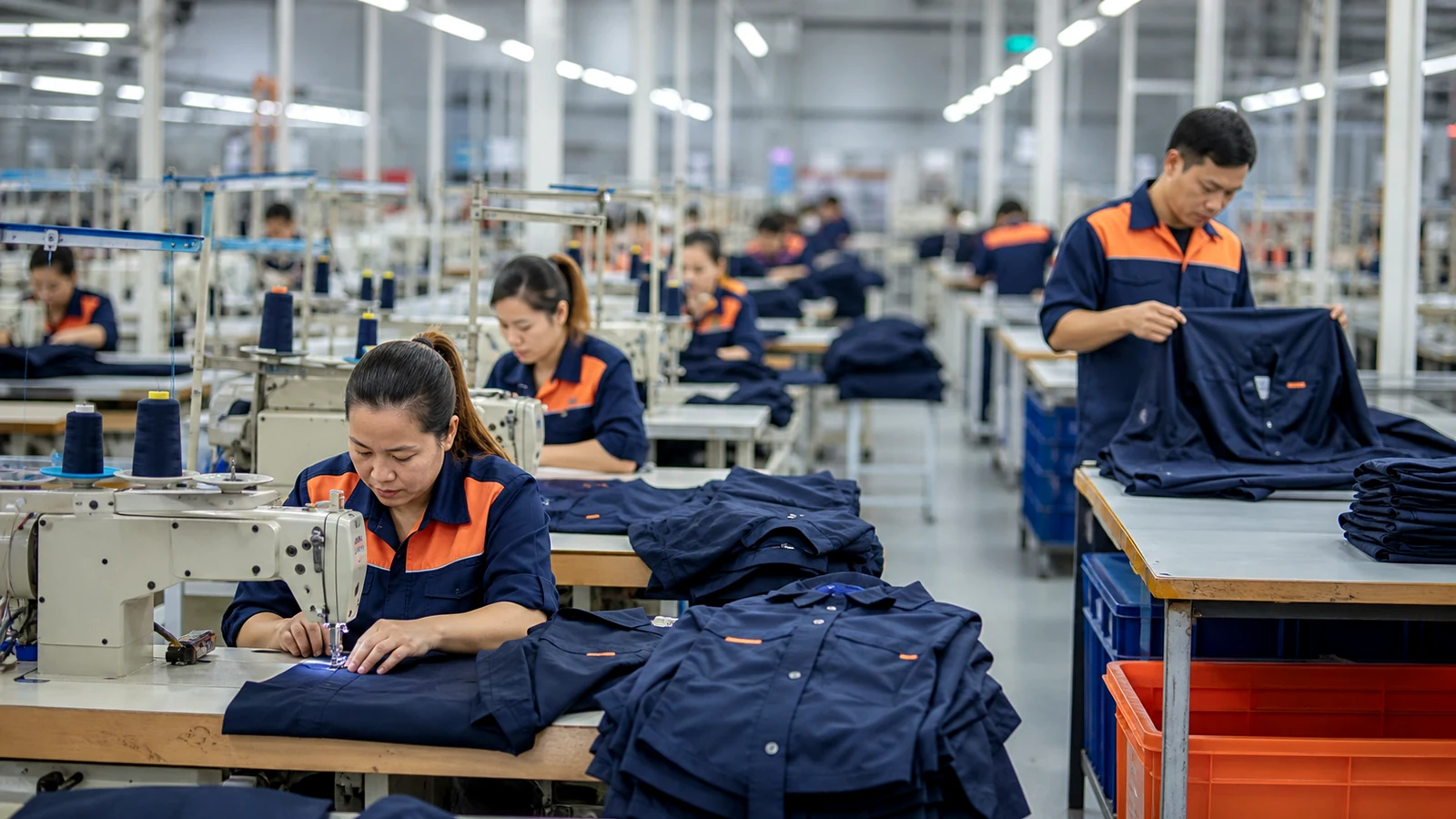
    • Fabric sourcing and cutting
    • Sewing and assembly
    • Quality control and inspection
    • Labeling and packaging per your specifications

    Why Private Label Makes Sense for Workwear

    1. No Factory Investment

    Building a garment factory requires millions in equipment, facilities, and labor. Private label gives you factory-quality production without the capital expenditure.

    2. Faster Time to Market

    With an experienced manufacturer, you can go from concept to finished product in 6-8 weeks. Compare that to 12-18 months to set up your own production.

    3. Scalability

    Start with 300 pieces to test the market. Scale to 10,000+ when demand grows. Your manufacturer scales with you — no need to hire, train, or buy more machines.

    4. Focus on What You Do Best

    You focus on building your brand, finding customers, and growing sales. The factory focuses on making great workwear. Everyone plays to their strengths.

    How to Start a Private Label Workwear Brand

    Step 1: Define Your Niche

    Don’t try to sell everything to everyone. Pick a focus:

    • Hi-vis workwear for construction
    • Hospitality uniforms for hotels and restaurants
    • Medical scrubs and lab coats
    • Corporate uniforms for specific industries
    • Flame-resistant workwear for oil & gas

    Step 2: Find the Right Manufacturer

    Look for a manufacturer that:

    • Specializes in your product category
    • Offers both OEM and ODM options
    • Has relevant certifications (ISO 9001, OEKO-TEX, EN standards)
    • Provides samples before bulk orders
    • Has experience with private label clients

    Step 3: Develop Your Products

    Work with your manufacturer to:

    • Select base styles from their catalog (ODM) or provide your own designs (OEM)
    • Choose fabrics, colors, and trims
    • Design your labels, tags, and packaging
    • Order and approve samples

    Step 4: Place Your First Order

    Start with the minimum order quantity to test the market. Most manufacturers require 300-500 pieces per style for private label orders.

    Step 5: Build Your Brand

    Create your website, set up B2B sales channels, attend trade shows, and start building relationships with buyers in your target market.

    Private Label Costs: What to Expect

    • Sample development: $50-200 per style (often refunded on bulk orders)
    • Custom labels: $0.10-0.50 per garment
    • Custom packaging: $0.50-2.00 per unit depending on complexity
    • Per-unit production cost: varies by garment type, fabric, and quantity
    • Shipping: sea freight is cheapest for large orders, air freight for urgent smaller orders

    Common Mistakes in Private Label Workwear

    • Skipping samples — always approve physical samples before bulk production
    • Ignoring certifications — your target market may require specific safety standards
    • Ordering too much initially — start small, test the market, then scale
    • Choosing on price alone — the cheapest manufacturer often delivers the most problems
    • Neglecting quality control — insist on pre-shipment inspection reports

    Launch Your Private Label with UNIWORKWEAR

    UNIWORKWEAR is a factory-direct manufacturer with 15+ years of private label experience. We’ve helped brands across 40+ countries launch and scale their workwear lines.

    • Full private label service — your brand, your labels, your packaging
    • 200+ existing styles available for ODM customization
    • OEM production from your own designs
    • MOQ from 300 pieces per style
    • Free samples for qualified buyers
    • Certifications: EN ISO 20471, OEKO-TEX, ISO 9001

    Start your private label project — tell us your vision and we’ll send you a detailed proposal with pricing within 48 hours.

    Related guides:

    Explore our private label services or request samples.
  • OEM vs ODM Workwear: What Is the Difference for B2B Buyers?

    OEM vs ODM Workwear: What Is the Difference for B2B Buyers?

    OEM vs ODM Workwear: What’s the Difference for B2B Buyers?

    When sourcing workwear from a manufacturer, you’ll encounter two terms constantly: OEM and ODM. Understanding the difference can save you months of development time and thousands in costs — or cost you both if you choose wrong.

    OEM: Original Equipment Manufacturing

    With OEM, you provide the design and the manufacturer produces it. You control every detail:

    • Your own patterns and technical drawings
    • Your fabric specifications (composition, weight, color)
    • Your labels, tags, and packaging
    • Your sizing charts

    Best for: Established brands with their own design team, companies with specific technical requirements, buyers who need exact specifications met.

    Typical process:

    1. You send tech packs (detailed design documents)
    2. Factory produces a sample
    3. You approve or request revisions
    4. Bulk production begins after final approval
    5. Lead time: 35-50 days after sample approval

    ODM: Original Design Manufacturing

    With ODM, the manufacturer provides existing designs that you can customize and sell under your brand. The factory has already developed the patterns, tested the fabrics, and refined the fit.

    • Choose from the factory’s existing catalog
    • Customize colors, fabrics, and branding
    • Add your labels, logos, and packaging
    • Skip the design phase entirely

    Best for: New brands entering the workwear market, companies without in-house design capabilities, buyers who need faster turnaround.

    Typical process:

    1. Browse the manufacturer’s catalog
    2. Select styles and request modifications
    3. Approve samples with your branding
    4. Bulk production
    5. Lead time: 25-35 days (faster since designs already exist)

    Side-by-Side Comparison

    Factor OEM ODM
    Design ownership You own the design Factory owns the base design
    Development time Longer (new patterns needed) Shorter (existing designs)
    Cost per unit Higher (custom development) Lower (shared development costs)
    MOQ Usually higher (500-1000+) Usually lower (300-500)
    Uniqueness 100% unique to your brand Base design may be shared
    Control Full control over every detail Control over branding and modifications
    Best for Established brands New brands, fast market entry

    Which Should You Choose?

    Choose OEM if:

    • You have your own designs and tech packs ready
    • Your brand requires unique, proprietary styles
    • You need specific technical features not available in standard catalogs
    • You’re ordering large volumes (1,000+ pieces per style)

    Choose ODM if:

    • You’re launching a new workwear brand and need to get to market fast
    • You don’t have an in-house design team
    • You want proven designs that are already tested and refined
    • You need lower MOQs to test the market

    Many buyers use both: ODM for their standard product lines and OEM for premium or specialized items.

    Questions to Ask Your Manufacturer

    1. Do you offer both OEM and ODM services?
    2. Can I see your ODM catalog?
    3. What’s the MOQ difference between OEM and ODM orders?
    4. How many sample revisions are included?
    5. Who owns the design IP for ODM products?

    OEM and ODM Workwear from UNIWORKWEAR

    At UNIWORKWEAR, we offer both OEM and ODM manufacturing for all workwear categories — hi-vis, industrial, hospitality, corporate, and medical uniforms.

    • OEM: Send us your tech packs and we’ll produce to your exact specifications
    • ODM: Browse our 200+ existing styles and customize with your branding
    • Private label packaging and labeling included
    • Free samples for qualified buyers
    • 15+ years of B2B manufacturing experience

    Tell us about your project — we’ll recommend the best approach for your brand and budget.

    Related guides:

    Learn about our OEM/ODM solutions or request a quote.

  • Hi-Vis Workwear Safety Standards Explained: EN ISO 20471 vs ANSI/ISEA 107

    Hi-Vis Workwear Safety Standards Explained: EN ISO 20471 vs ANSI/ISEA 107

    Hi-Vis Workwear Safety Standards Explained: EN ISO 20471 vs ANSI/ISEA 107

    If you’re sourcing hi-vis workwear for your team, understanding safety standards isn’t optional — it’s a legal requirement. The wrong certification can mean fines, failed inspections, or worse, a preventable accident.

    This guide breaks down the two major hi-vis standards used worldwide so you can order with confidence.

    What Is Hi-Vis Workwear?

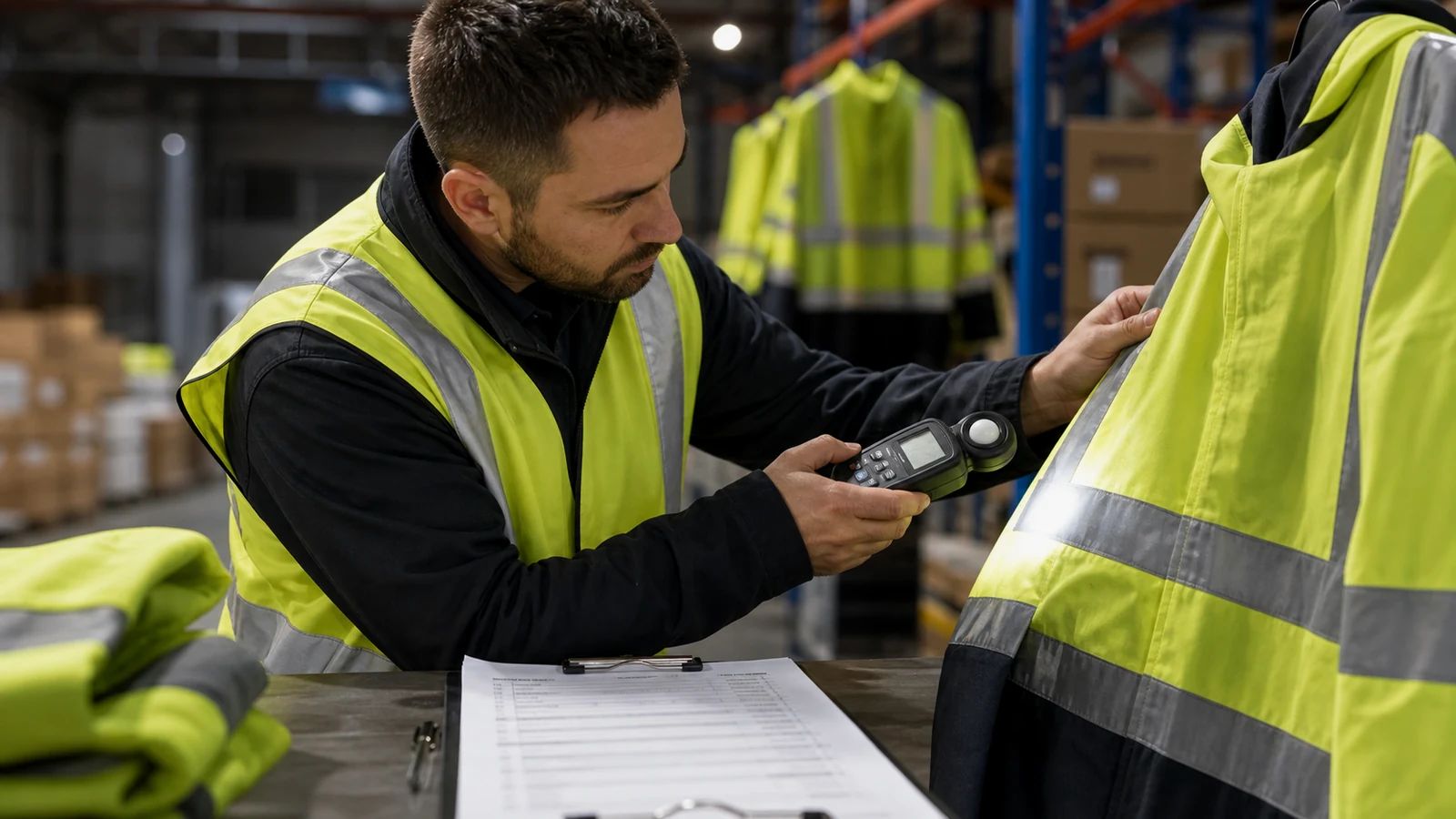
    High-visibility workwear uses fluorescent materials and retroreflective strips to make workers visible in low-light conditions, poor weather, or high-traffic environments. It’s mandatory in industries like construction, road work, logistics, mining, and emergency services.

    The two dominant standards globally are:

    • EN ISO 20471 — used in Europe, UK, Australia, and most international markets
    • ANSI/ISEA 107 — used in the United States and Canada

    EN ISO 20471: The European Standard

    EN ISO 20471 classifies hi-vis clothing into three classes based on the minimum area of visible material:

    Class 1 — Minimum Visibility

    • Background material: 0.14 m²
    • Retroreflective material: 0.10 m²
    • Typical garments: vests, belts, arm bands
    • Use: low-risk environments with slow-moving traffic

    Class 2 — Medium Visibility

    • Background material: 0.50 m²
    • Retroreflective material: 0.13 m²
    • Typical garments: vests, short-sleeve shirts
    • Use: moderate-risk environments, warehouse areas, parking lots

    Class 3 — Maximum Visibility

    • Background material: 0.80 m²
    • Retroreflective material: 0.20 m²
    • Typical garments: jackets, coveralls, full trousers with torso coverage
    • Use: high-risk environments — highways, railways, airports, construction sites

    Class 3 garments must have reflective strips on both the torso and sleeves or legs, ensuring 360-degree visibility.

    ANSI/ISEA 107: The American Standard

    ANSI/ISEA 107-2020 uses a similar tiered system but with different terminology:

    Type O (Off-Road)

    • For workers not on roadways
    • Warehouses, parking lots, outdoor events
    • Available in Class 1 only

    Type R (Roadway)

    • For workers exposed to traffic and road equipment
    • Construction zones, utility work, road maintenance
    • Available in Class 2 and Class 3

    Type P (Public Safety)

    • For emergency responders — police, fire, EMS
    • Allows alternative color combinations
    • Available in Class 2 and Class 3

    Key Differences Between EN ISO 20471 and ANSI/ISEA 107

    Feature EN ISO 20471 ANSI/ISEA 107
    Region Europe, UK, International USA, Canada
    Classes 1, 2, 3 1, 2, 3 (within Types O, R, P)
    Fluorescent colors Yellow, orange, red Yellow-green, orange-red, red
    Wash durability testing Required (25+ washes) Required (25+ washes)
    Flame resistance Separate standard (EN ISO 14116) Can be combined (ANSI 107 + NFPA 2112)

    Which Standard Do You Need?

    It depends entirely on where your workers operate:

    • Selling to European buyers? You need EN ISO 20471 certification
    • Selling to US/Canadian buyers? You need ANSI/ISEA 107 compliance
    • Selling globally? Dual-certified garments cover both markets and simplify your supply chain

    Many B2B buyers now request dual certification as standard, especially multinational companies operating across regions.

    What to Ask Your Manufacturer

    Before placing an order for hi-vis workwear, ask these questions:

    1. Which certifications do your hi-vis garments carry? (Ask for test reports)
    2. What class level is available for each garment style?
    3. How many wash cycles do the reflective strips maintain performance?
    4. Can you produce dual-certified (EN ISO 20471 + ANSI) garments?
    5. Do you offer flame-resistant hi-vis options?

    Source Certified Hi-Vis Workwear from UNIWORKWEAR

    At UNIWORKWEAR, we manufacture EN ISO 20471 and ANSI/ISEA 107 certified hi-vis workwear — jackets, vests, coveralls, trousers, and polo shirts. Every garment comes with full test documentation.

    • Class 1, 2, and 3 options available
    • Dual certification for global buyers
    • Flame-resistant hi-vis combinations
    • Custom branding — logos, reflective tape patterns, color matching
    • MOQ from 300 pieces per style

    Request certified hi-vis samples — we’ll ship them to you within 7 days.

    Related guides:

    View our certifications or hi-vis products.

  • How to Choose the Right Workwear for Your Industry

    How to Choose the Right Workwear for Your Industry

    Choosing the wrong workwear costs more than money — it costs productivity, safety, and your company’s professional image. Whether you’re outfitting a construction crew, a hotel staff, or a warehouse team, the right work uniform makes a measurable difference.

    This guide breaks down exactly what to look for when selecting workwear, based on your specific industry and needs.

    Why Workwear Selection Matters

    Work uniforms aren’t just clothing. They serve three critical functions:

    • Safety — protecting workers from hazards like heat, chemicals, low visibility, and sharp objects
    • Professionalism — creating a consistent brand image that builds trust with clients
    • Comfort and productivity — workers who are comfortable move better, focus better, and stay longer

    A poor choice in any of these areas leads to higher turnover, safety incidents, and a weaker brand presence.

    Workwear by Industry: What You Actually Need

    Construction and Heavy Industry

    Construction sites demand the highest level of protection. Your workwear checklist should include:

    • Hi-vis jackets and vests — EN ISO 20471 certified for European markets, ANSI/ISEA 107 for North America
    • Flame-resistant fabrics — essential for welding, electrical work, and oil & gas environments
    • Reinforced knees and elbows — extends garment life in physically demanding roles
    • Multi-pocket cargo designs — workers need tools within reach at all times

    Fabric choice matters here. Look for poly-cotton blends (65/35) for durability and breathability, or 100% cotton for flame-resistant applications.

    Hospitality — Hotels, Restaurants, and Catering

    In hospitality, your staff’s appearance is your brand. Guests judge your establishment within seconds of walking in.

    • Chef coats and kitchen uniforms — breathable, stain-resistant, easy to wash at high temperatures
    • Front-of-house uniforms — tailored fits, premium fabrics, brand colors and embroidery
    • Housekeeping uniforms — comfortable, durable, professional without being restrictive

    For hospitality, fabric weight matters. Lighter fabrics (150–180 GSM) keep staff comfortable during long shifts in warm environments.

    Healthcare and Medical

    Medical workwear must balance hygiene, comfort, and functionality:

    • Scrubs — antimicrobial fabrics that withstand industrial laundering
    • Lab coats — fluid-resistant, easy to remove in emergencies
    • Comfortable fits — healthcare workers are on their feet 12+ hours

    Polyester-rayon blends are popular in healthcare for their wrinkle resistance and color retention after repeated washing.

    Corporate and Office

    Corporate uniforms build brand identity and create a sense of team unity:

    • Polo shirts and button-downs — with embroidered company logos
    • Blazers and tailored trousers — for client-facing roles
    • Casual branded apparel — for tech companies and startups with a relaxed dress code

    The key here is consistency. Every employee wearing the same quality, well-fitted uniform reinforces your brand at every customer touchpoint.

    Logistics and Warehousing

    Warehouse workers need freedom of movement and visibility:

    • Hi-vis polo shirts or t-shirts — lighter than jackets, suitable for indoor environments
    • Stretch-fit trousers — for bending, lifting, and climbing
    • Reflective strips — critical in environments with forklifts and heavy machinery

    5 Key Factors When Choosing a Workwear Supplier

    Once you know what your industry requires, choosing the right supplier is the next critical decision:

    1. Fabric Quality and Certifications

    Ask for fabric specifications — GSM weight, composition, and relevant safety certifications. A reliable manufacturer will provide test reports and compliance documentation without hesitation.

    2. Customization Capabilities

    Your workwear should carry your brand. Look for a supplier that offers embroidery, screen printing, heat transfer, sublimation, and custom labels. The more options available, the better you can match your brand guidelines.

    3. Minimum Order Quantities (MOQ)

    Factory-direct manufacturers typically require MOQs ranging from 300 to 1,000 pieces per style. This keeps per-unit costs low. If you need smaller quantities, look for suppliers with flexible MOQ policies or stock programs.

    4. Lead Time and Reliability

    Standard production lead times for custom workwear range from 30 to 45 days. Factor in shipping time based on your location. A good supplier communicates proactively about production milestones and potential delays.

    5. OEM/ODM and Private Label Options

    If you’re building your own workwear brand, you need a manufacturer that supports private label production — your designs, your labels, your packaging. OEM (Original Equipment Manufacturing) means the factory produces to your exact specifications. ODM (Original Design Manufacturing) means the factory offers existing designs you can customize and rebrand.

    Common Mistakes to Avoid

    • Choosing price over quality — cheap workwear wears out fast, costing more in replacements
    • Ignoring worker feedback — the people wearing the uniforms daily know what works and what doesn’t
    • Skipping size sampling — always request samples across your size range before placing a bulk order
    • Overlooking compliance — safety standards vary by country and industry, non-compliance can result in fines or worse

    Ready to Source the Right Workwear?

    At UNIWORKWEAR, we manufacture work uniforms for every industry — from hi-vis construction gear to tailored hospitality uniforms. With 15+ years of factory-direct production, we supply B2B buyers across 40+ countries with fully customized, certified workwear.

    What we offer:

    • OEM, ODM, and private label manufacturing
    • Full customization — embroidery, printing, custom labels and packaging
    • Certifications: EN ISO 20471, OEKO-TEX, and more
    • Flexible MOQs starting from 300 pieces
    • 30–45 day production lead time

    Request a free quote today and tell us what your team needs. We’ll send you fabric samples and a detailed proposal within 48 hours.

    Related guides:

    Explore our full product range or customization services.